


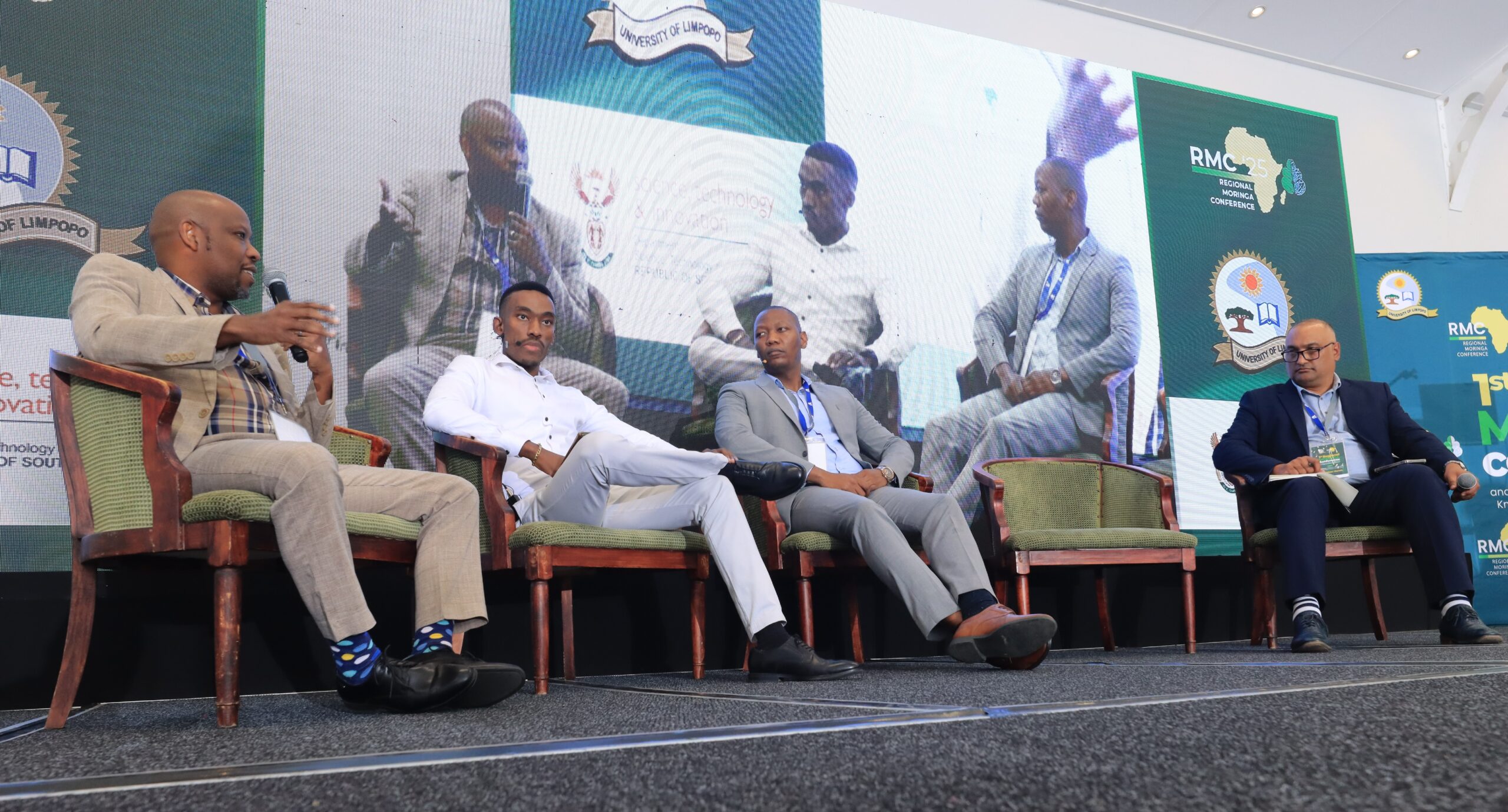
Global experts, farmers, entrepreneurs, and policymakers engage in discussions during the 1st Regional Moringa Conference on how Moringa can drive inclusive growth and sustainable livelihoods across Africa. Photos: Frans Nkhapele
By Malatji Monyelegwete, Hunadi Motlhala & Caroline Khoza
Renowned for its exceptional nutritional, medicinal, and economic value, the Moringa tree has become a symbol of Africa’s potential to grow a sustainable bioeconomy
The University of Limpopo (UL) became a focal point for agricultural innovation and economic transformation as it hosted the 1st Regional Moringa Conference, bringing together global experts, farmers, entrepreneurs, and policymakers to explore how Moringa can drive inclusive growth and sustainable livelihoods across the continent.
Held under the theme “Moringa: Africa’s Green Gold – Unlocking Health, Wealth, and Sustainability”, the conference was jointly organised by UL’s Technology Transfer Office and the School of Agriculture and Environmental Sciences, in collaboration with the Department of Science and Innovation (DSI), the Moringa Development Association of South Africa (MDASA), and the Technology Innovation Agency (TIA). The event served as a platform for showcasing research, enterprise development, and indigenous innovation.
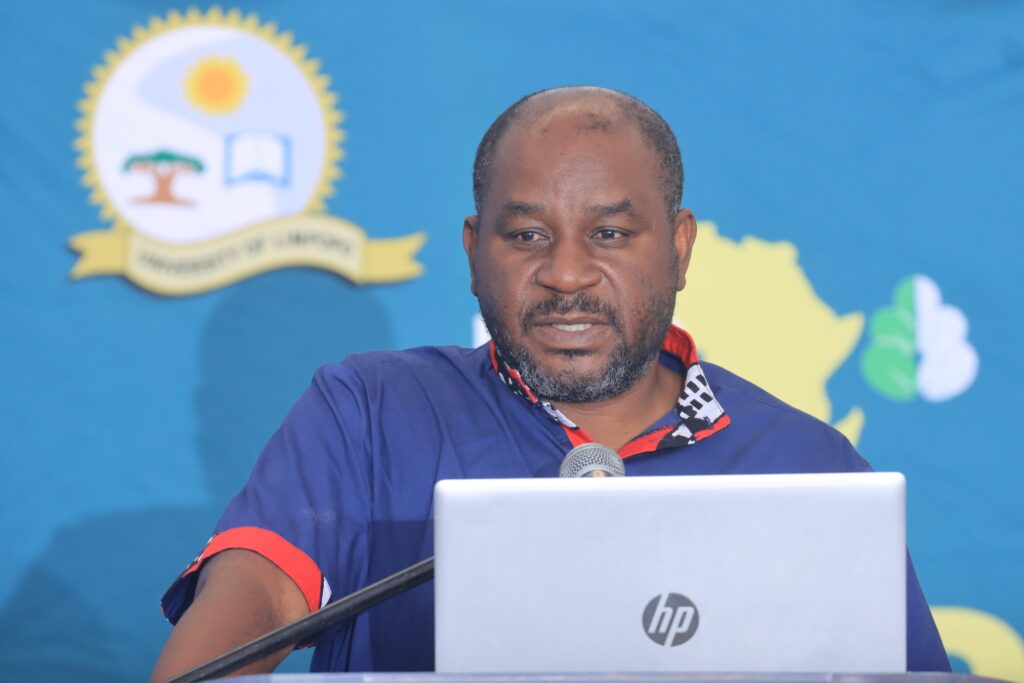
Dr Thembinkosi Mabila, Director of the Department of Research Administration and Development at UL.
In his opening remarks, Dr Thembinkosi Mabila, Director of the Department of Research Administration and Development at UL, described the Moringa tree as “a symbol of health, resilience, and economic opportunity.” He reaffirmed UL’s commitment to “Finding Solutions for Africa” through research that combats poverty, enhances nutrition, and creates sustainable livelihoods.
“Moringa represents more than just a plant; it’s a catalyst for job creation, food security, and the circular economy,” he said.
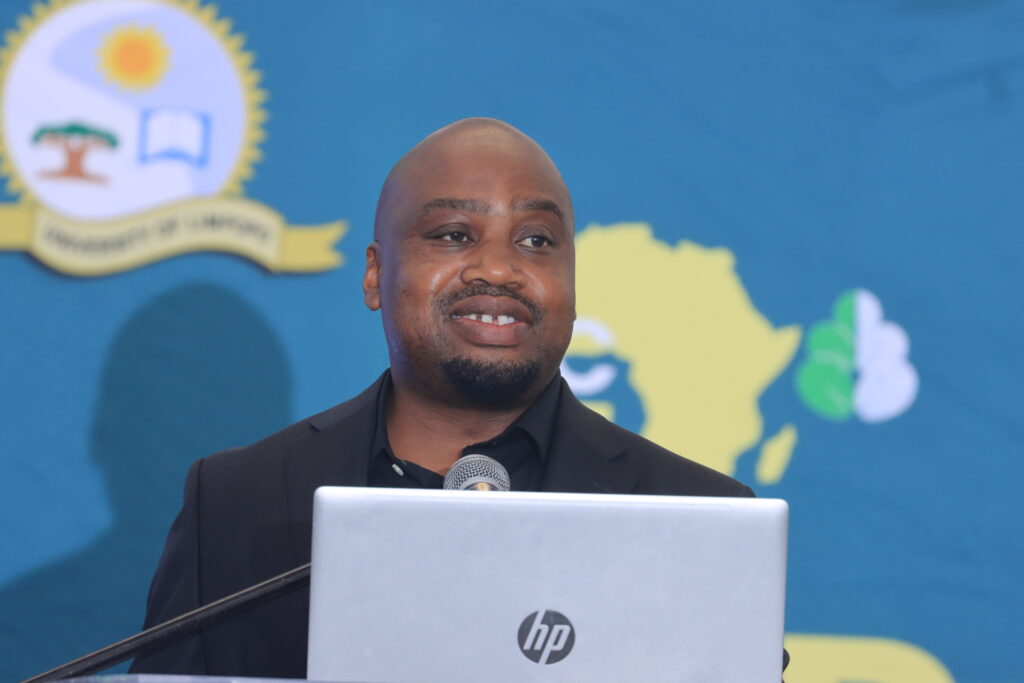
Professor Ashwell Ndhlala, Associate Professor and Bioeconomy Development Specialist at UL and Conference Convener.
Professor Ashwell Ndhlala, Associate Professor and Bioeconomy Development Specialist at UL, and one of the conference organisers, reinforced this message, stressing the importance of merging indigenous knowledge with scientific innovation.
“The synergy between traditional wisdom and research will unlock Africa’s green gold and foster environmental and economic resilience,” he noted.
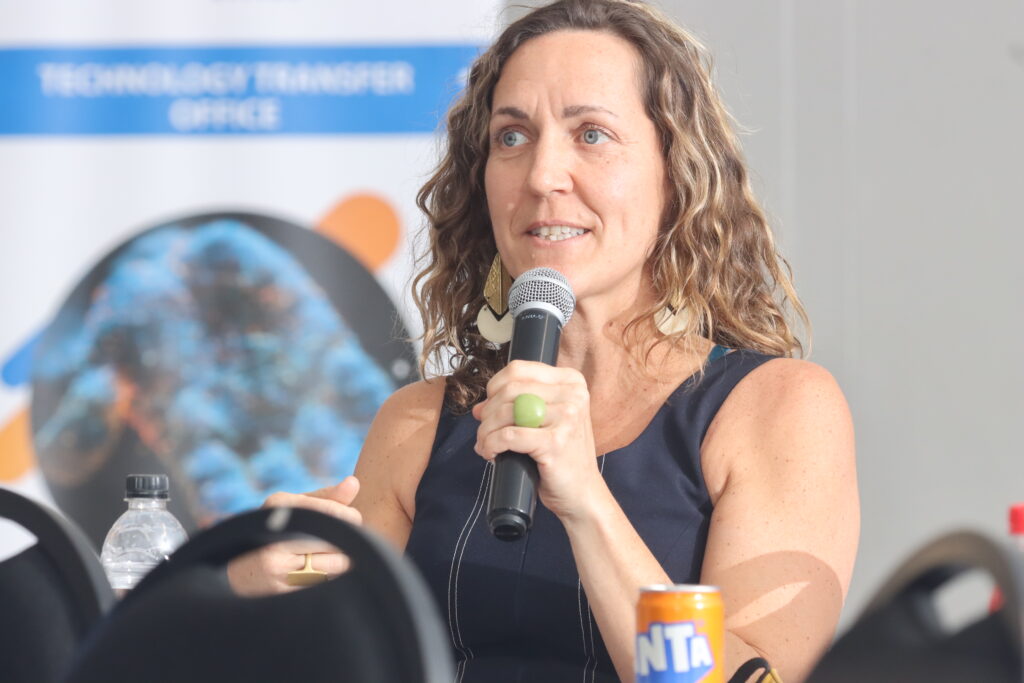
Dr Carrie Waterman from the University of California (USA).
International keynote speakers provided global insights into Moringa’s value chain and scientific benefits. Dr Carrie Waterman from the University of California (USA) presented findings showing that Moringa-fortified foods significantly improve haemoglobin, Vitamin A, and folic acid levels in schoolchildren, while also boosting milk supply among breastfeeding mothers.
“Moringa is a smart crop, nutrient-dense, drought-resistant, and socially transformative,” she affirmed.
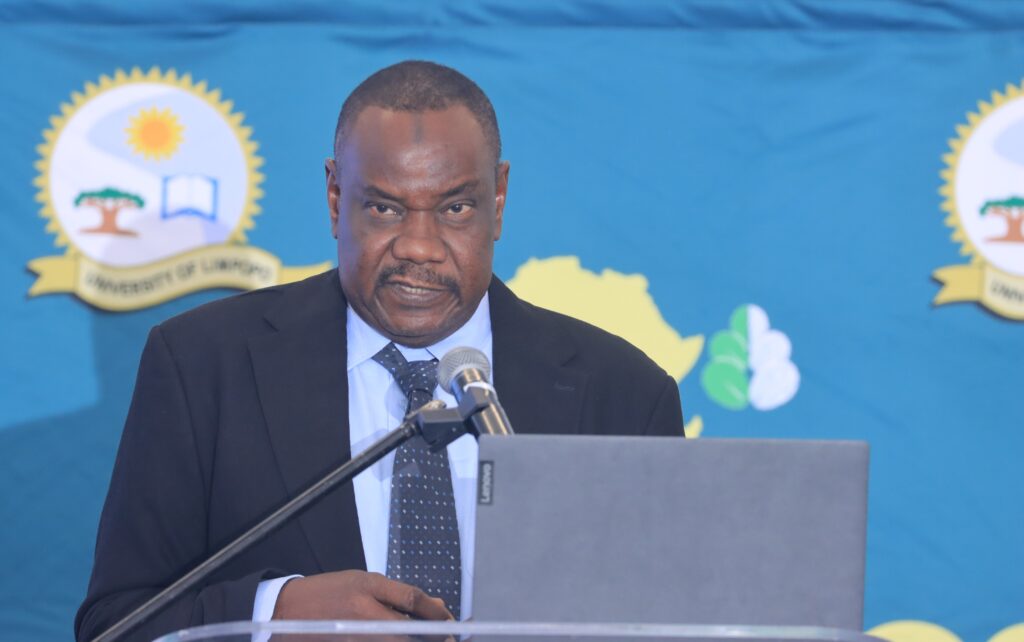
Professor Hafiz Abdelgadir of Eldaein University (Sudan).
From Sudan, Professor Hafiz Abdelgadir of Eldaein University described Moringa as “The Miracle Tree,” noting its vital role in combating malnutrition and disease.
“All parts of the tree are useful, its leaves, bark, flowers, and roots treat conditions from ulcers to inflammation,” he said, adding that the crop’s affordability and accessibility make it ideal for Africa’s rural economies.
Professor Kudakwashe Chitindingu from Chinhoyi University of Technology (Zimbabwe) emphasised that research must now translate into tangible economic outcomes.
“We have the data, now we must turn it into businesses that empower communities,” he urged.
From the public sector, Dr Khathutshelo Tshikolomo of the Limpopo Department of Agriculture and Rural Development (LDARD) led a panel on entrepreneurship, drawing lessons from Limpopo’s cannabis and hemp growers. He stressed that sustainable agribusiness depends on robust partnerships between government, researchers, and local producers.
“For our communities to thrive, innovation must walk hand in hand with commercial viability,” he said.
Entrepreneurs such as Didintle Moreki from Botswana shared inspiring success stories of using indigenous plants in high-tech industries. Her company, which employs over 2 000 rural women, upcycles morula, moringa, and mowana into AI-driven skincare products.
“Sustainability and profitability reinforce each other,” she said, urging African researchers to protect indigenous intellectual property and ensure that communities co-own value chains.
Thabo Lebelo, Manager of UL’s Technology Transfer Office and Digital Innovation Hub, added that the conference aimed to translate research into enterprise through three tracks: Academic, Entrepreneurship, and Innovation.
“We aimed to explore how Moringa can be commercialised for the benefit of people and the planet. From its leaves and seeds to its roots, every part holds economic promise,” he explained.