


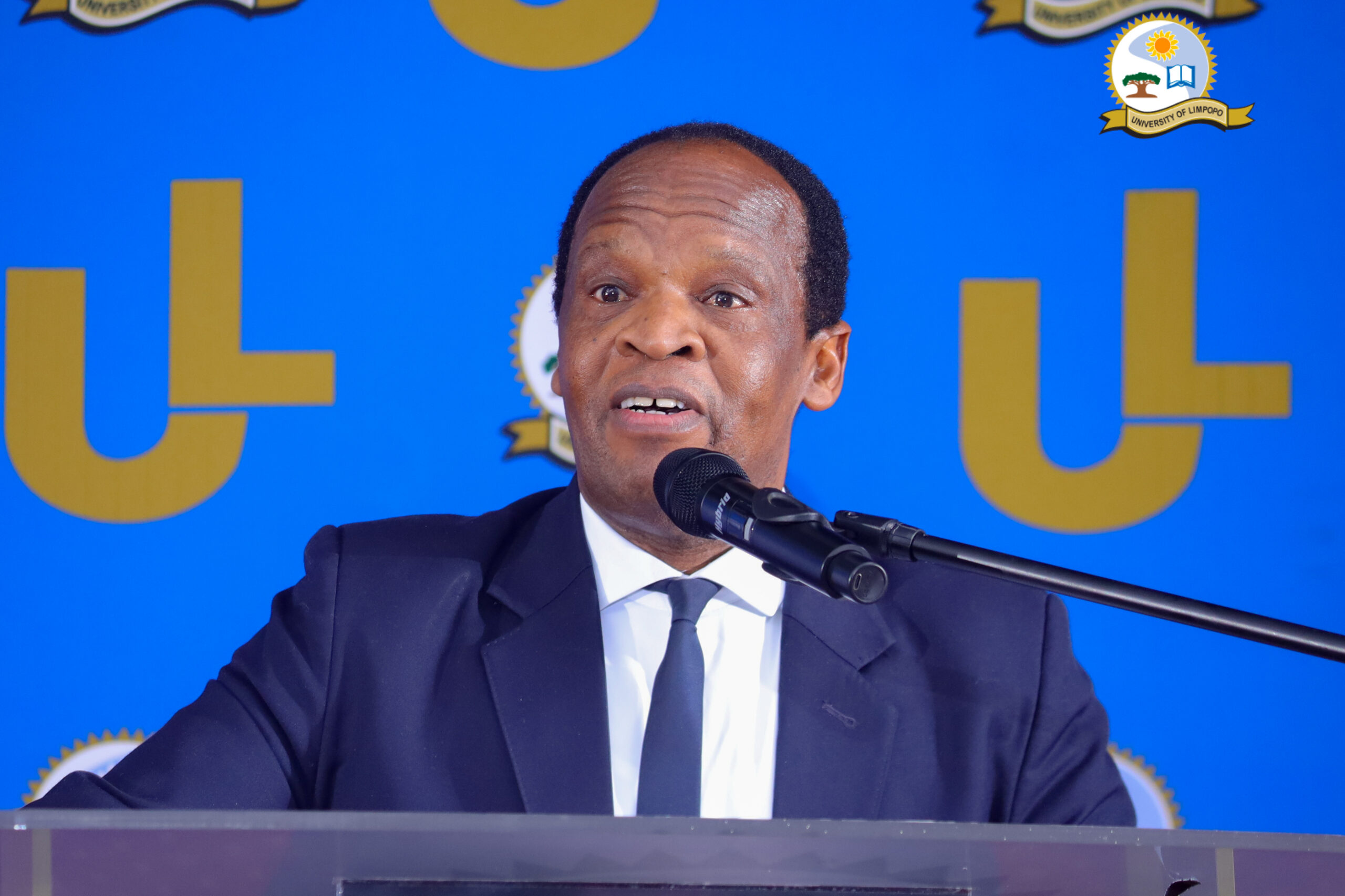
Senior Counsel Dr Muzi Sikhakhane delivers the keynote address at the 11th Onkgopotse Tiro Memorial Lecture at UL.
Senior Counsel Advocate Muzi Sikhakhane tells the 11th Onkgopotse Tiro Memorial Lecture at the University of Limpopo that remembering the slain student leader must move beyond history lessons and ceremonial commemorations and apply Tiro’s fearless spirit to confront the challenges facing the country today
By Nyeleti Nyathi – ulpublications@ul.ac.za
More than fifty years after Onkgopotse Abram Tiro was assassinated by a parcel bomb, Senior Counsel Dr Muzi Sikhakhane has challenged South Africa’s young people to move beyond commemorating the student leader and consider what his life, convictions and sacrifice mean for the present generation
Dr Sikhakhane was delivering the keynote address at the 11th Onkgopotse Tiro Memorial Lecture, hosted by the University of Limpopo (UL), under the theme “South Africa at the Crossroads – Invoking the Spirit of Tiro.”
Dr Sikhakhane addressed an audience composed of members of the university community, political figures and Tiro’s family reflecting on the life of the former student leader whose relentless activism against apartheid education played a foundational role in the rise of the Black Consciousness movement.
Before Dr Sikhakhane began his address, Tiro’s brother, Mookami Tiro, challenged him not to simply recount the history surrounding his brother’s life, but to teach the audience the essence of who Tiro truly was.
In response, Dr Sikhakhane paid tribute to the Tiro family, describing them as the embodiment of a “revolutionary ethic” rooted in profound personal sacrifice.
Recalling Tiro’s words of 29 April 1972, Dr Sikhakhane highlighted his vision of a liberated South Africa:
“Let the Lord be praised, for the day shall come when all shall be free to breathe the air of freedom which is theirs to breathe.”
Onkgopotse Tiro’s life was tragically cut short on 1 February 1974 when a parcel bomb exploded in Botswana, leaving behind a legacy that continues to inspire many South Africans.
Dr Sikhakhane emphasised that the assassination represented far more than the tragic death of a single young activist.
“The smithereens into which that parcel bomb turned Onkgopotse Tiro’s body were not just smithereens of his body, of his head, of his brain, but smithereens of our dreams of liberation,” he noted.
Dr Sikhakhane challenged young people to confront political and social apathy and ask whether their daily actions honour the sacrifices made by those who fought for liberation.
He urged South Africans to stop asking what Tiro would have done if he were alive today. Instead, he said, they should focus on a deeper introspection of asking what Tiro represented and whether the conduct of the present generation honours or betrays that spirit.
Concluding his address, he issued a strong call to revive Black Consciousness, describing it as a crucial “new song of freedom” that could help restore humanity and dignity.
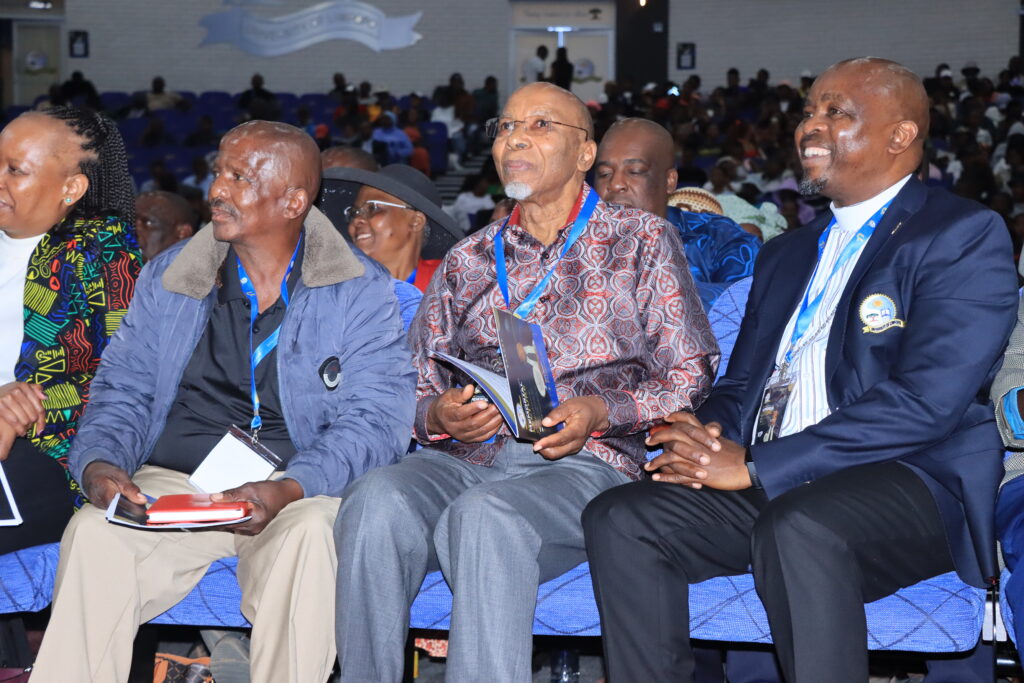
From left: Mookami Tiro, younger brother of Onkgopotse Tiro; Dr Mosibudi Mangena, former AZAPO President and Minister of Science and Technology; and Reverend Awedzani Nemaukhwe at the 11th Onkgopotse Tiro Memorial Lecture.
The message echoed Mookami Tiro’s earlier opening challenge that remembering his brother, the slain activist, should not simply mean repeating historical accounts. It should also involve understanding the principles that guided his activism and applying them to the pressing challenges facing South Africa today.
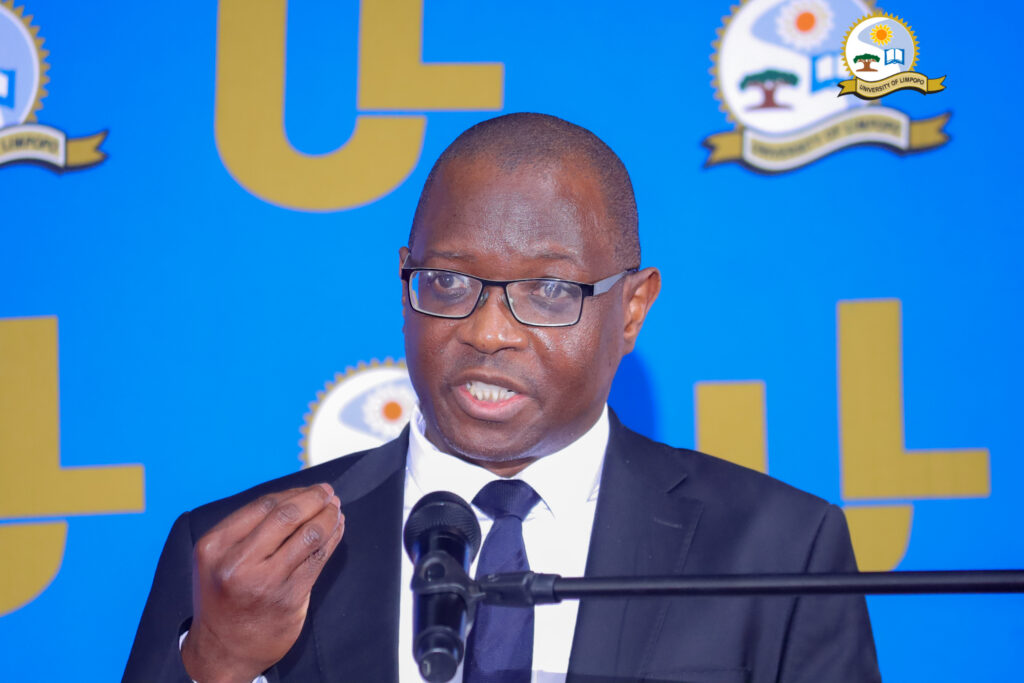
UL Vice-Chancellor and Principal, Dr Jeffrey Mabelebele, speaks at the 11th Onkgopotse Tiro Memorial Lecture.
UL Vice-Chancellor and Principal Dr Jeffrey Mabelebele noted that the memorial lecture came at a critical time when South Africa and black people faced an “existential crisis”.
Dr Mabelebele emphasised that the university, guided by its history and mission, holds a distinct responsibility to examine the factors preventing the country from developing a sustainable agenda that serves the majority of South Africans.
Adding youth consciousness perspective from the library sector, Puleng Moshoeu, a librarian at UL, urged young people to look beyond reducing Tiro to a mere historical figure or simply to the name attached to a university building.
“We are here because political liberation begins with consciousness. We are here because we understand that education is inseparable from freedom,” Moshoeu said.
Moshoeu stressed that young people have a responsibility to question the material conditions they face, drawing parallels between Tiro’s resistance to apartheid education and the challenges confronting students today.
For a final-year LLB student Phuti Mabotha, the lecture offered a different understanding of Tiro’s legacy.
“The lecture made me realise that remembering Tiro is not only about knowing his history but understanding the values he stood for. As young people, we have a responsibility to carry those values forward and question the challenges facing our country today,” Mabotha reflected.
“The smithereens into which that parcel bomb turned Onkgopotse Tiro’s body were not just smithereens of his body … but smithereens of our dreams of liberation.”