


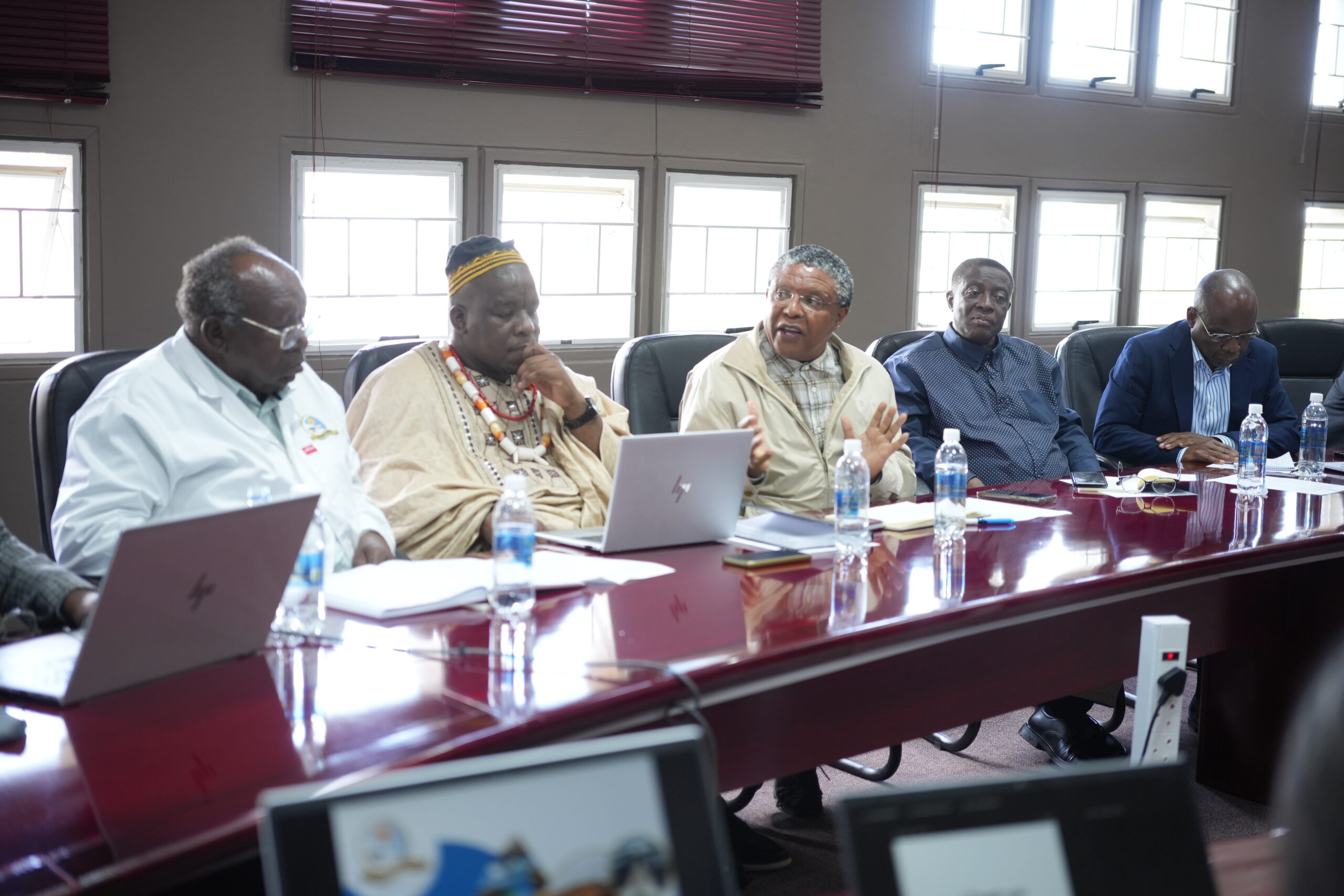
Internationally acclaimed scholar Professor Phuti Ngoepe leads an NRF-funded Research Chair advancing energy storage innovation through computational modelling at the University of Limpopo. Photo: Malatji Monyelegwete
New NRF-funded Chair in Computational Modelling of Energy Materials positions the University of Limpopo at the forefront of battery research, student development and economic transformation
By Johannes Selepe – Mosela.selepe@ul.ac.za
As the global transition towards renewable energy accelerates, the University of Limpopo (UL) has secured a prestigious Research Chair in Computational Modelling of Energy Materials
Funded by the National Research Foundation (NRF) and led by internationally acclaimed scholar Professor Phuti Ngoepe, the Chair serves as a strategic intervention in addressing one of the most critical challenges in the global energy landscape, efficient energy storage.
As the global community moves away from fossil fuels to mitigate climate change, the demand for reliable energy storage systems has become essential to ensure a continuous supply of power, even when renewable sources such as solar and wind are unavailable.
The Chair will focus on advanced computational modelling to expedite the discovery and optimisation of materials used in lithium-ion batteries and next-generation energy storage systems. By integrating digital simulations with experimental methods, the research aims to accelerate innovation and reduce costs across the energy value chain — from mineral extraction to final energy products.
Prof Ngoepe described the appointment as both an honour and a significant responsibility.
“I feel deeply privileged to have been awarded this competitive Chair. It will contribute significantly to the development of the Materials Modelling Centre at UL and the country as a whole,” he said.
Beyond scientific breakthroughs, the Chair is expected to play a transformative role in student development.
“This Chair will accelerate innovation in energy storage while simultaneously developing the next generation of scientists equipped to drive South Africa’s transition to a sustainable economy,” Prof Ngoepe added.
Prof Ngoepe has built a distinguished legacy of mentorship, having supervised more than 110 Master’s and doctoral candidates, many of whom now hold influential leadership positions in science, industry and government.
Among his notable former students is Happy Sithole, now Centre Manager of South Africa’s National Integrated Cyberinfrastructure System (NICIS), as well as Dr Maje Phasha, Chief Scientist at Mintek. Other alumni include Dr Helen Chuma, a Senior Principal Researcher at Johnson Matthey in the United Kingdom, alongside several professors and senior scientists across leading institutions.
This proven track record underscores the Chair’s capacity to produce world-class graduates equipped with expertise in computational science, digital technologies and artificial intelligence. The initiative will also create opportunities for postgraduate training, research collaborations and internships for unemployed graduates, strengthening South Africa’s pipeline of highly skilled scientists.
Ultimately, the impact of the Chair extends beyond academia, promising significant contributions to local communities and the broader economy.
By enhancing the efficiency and performance of energy storage systems, particularly lithium-ion batteries, the research is poised to support the large-scale rollout of affordable electric vehicles and sustainable public transport systems.
Such advancements are expected to reduce dependence on fossil fuels, lower energy costs, and contribute to a climate-resilient economy, with direct benefits for communities across Limpopo and beyond. The research also supports local beneficiation of critical minerals, unlocking new avenues for industrial growth and job creation along the energy value chain.
With nearly 300 published papers and extensive international collaborations, Prof Ngoepe brings world-class expertise to the Chair. The long-term vision is to translate computational discoveries into practical applications, bridging the gap between predictive simulations, laboratory validation and, ultimately, commercialisation through strategic partnerships.
Previously, Prof Ngoepe held a South African Research Chairs Initiative (SARChI) Chair in Computational Modelling of Materials from 2007 to 2021. He also served as a Fellow of the Council for Scientific and Industrial Research (CSIR) from 1996 to 2012.
He has been actively involved in both local and international research networks, including chairing the International Conference on Defects in Insulating Materials in 2000 in Johannesburg and serving on the conference’s Advisory Committee from 1996 to date.
“This Chair will accelerate innovation in energy storage while simultaneously developing the next generation of scientists equipped to drive South Africa’s transition to a sustainable economy.”