


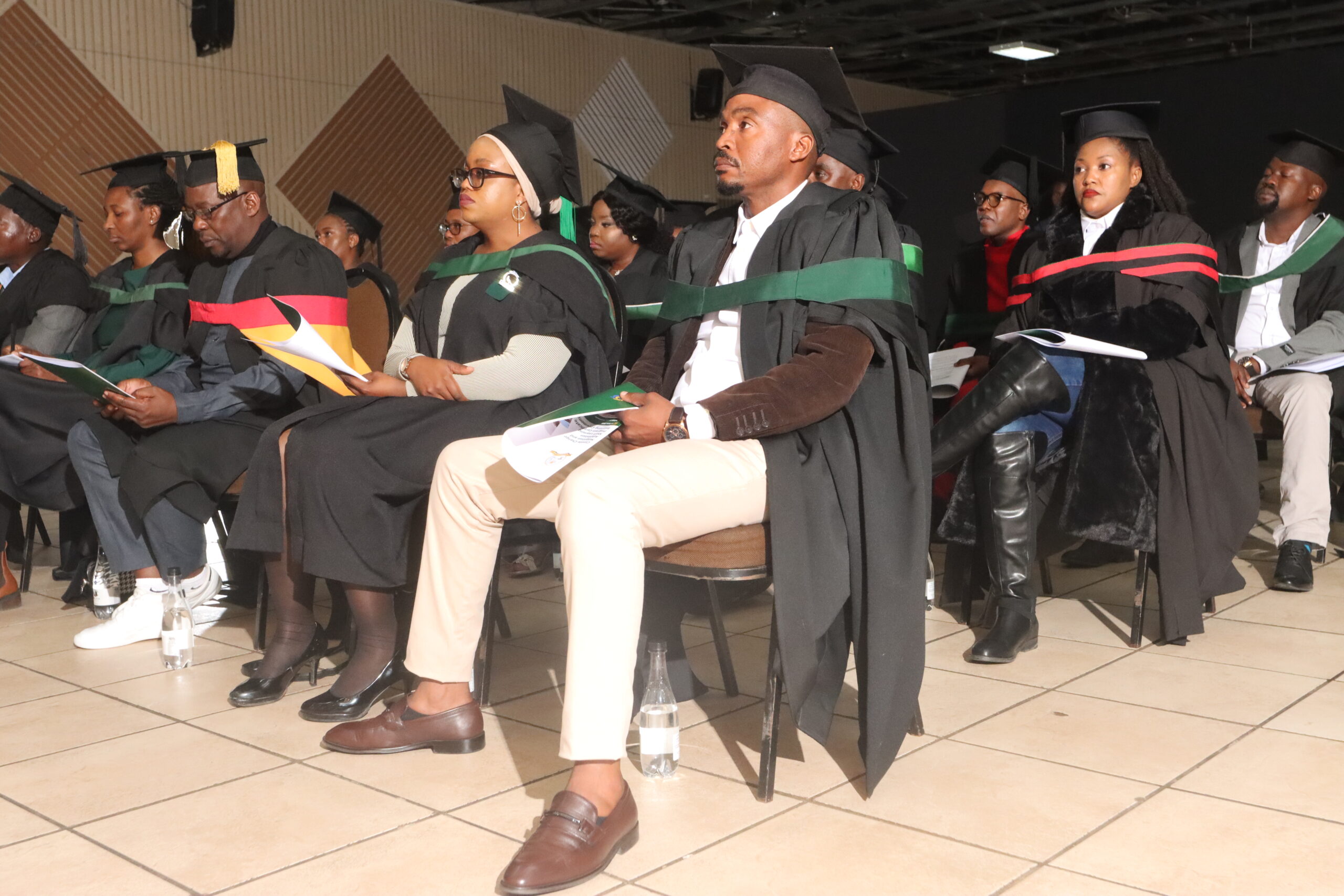
Some of the 25 graduates who successfully completed the University of Limpopo’s inaugural Climate Change Mitigation and Adaptation Short Learning Programme, eager to contribute to addressing global environmental challenges. Photos: Mohau Seleka
By Malatji Monyelegwete – malatji.monyelegwete@ul.ac.za
In a time marked by unpredictable climate change, the University of Limpopo (UL) has successfully equipped 25 graduates with essential skills through its inaugural Climate Change Mitigation and Adaptation Short Learning Programme
This milestone cohort is the first to graduate since the programme received approval from the Council on Higher Education (CHE) and completed internal university processes.
Introduced in 2023, the intensive 12-week course, offered by the Centre for Global Change (CGC) in the School of Agriculture and Environmental Sciences, Faculty of Science and Agriculture, aims to provide participants with both theoretical knowledge and practical skills to effectively respond to climate change challenges.
Key benefits of the programme include: a comprehensive understanding of climate change mitigation and adaptation strategies; the ability to analyse, design, and implement climate change projects; and networking opportunities with professionals, experts, and peers in the field.
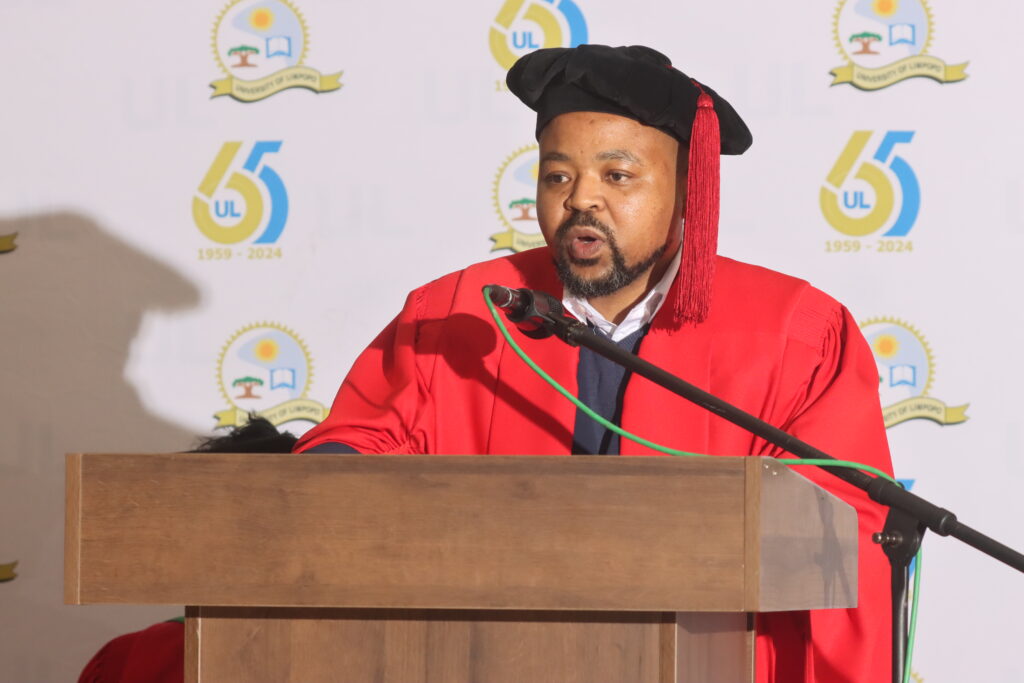
Dr Mohau Mateyisi delivers the keynote address at the certification ceremony.
During the certification ceremony, Dr Mohau Mateyisi from the Council for Scientific and Industrial Research (CSIR) delivered the keynote address on Climate Change Science, Trends, and Projections for Southern Africa. He highlighted that regional and global Earth System Models provide a solid evidence base confirming the reality and future trajectory of climate change in the region.
“Climate change manifests not only through long-term shifts but also via extreme weather events occurring over short timescales,” Dr Mateyisi explained. He acknowledged that despite significant advancements in climate science and understanding regional impacts, there remain substantial knowledge gaps and challenges.
Dr Mateyisi encouraged graduates to view their accomplishment not as an endpoint but as a stepping stone toward becoming part of a global community of problem solvers committed to enhancing climate resilience and supporting regional development goals.
Professor Kingsley Ayisi, Manager of the CGC and Programme Coordinator, stressed the urgency of the issue. “This course empowers participants to tackle one of humanity’s most critical challenges by equipping them with the knowledge and tools necessary for effective mitigation and adaptation.”
Professor Leseilane Mampuru, Acting Executive Dean of the Faculty of Science and Agriculture, expressed pride in the successful launch and ambitious plans for the future. “Climate change is a complex and urgent global challenge. Our faculty is dedicated to making a meaningful contribution by training more individuals to respond effectively. We aim to increase our graduate intake to at least 100 per cohort shortly,” he stated.
Graduates share insights from the Climate Change Mitigation and Adaptation Short Learning Programme.

Palesa Mokheseng: UL Alumna (BSc) “With this qualification, I will apply the knowledge gained in my daily life and research. It will enable me to make informed decisions regarding climate change. Understanding mitigation and adaptation strategies is crucial to contributing to a sustainable future.”
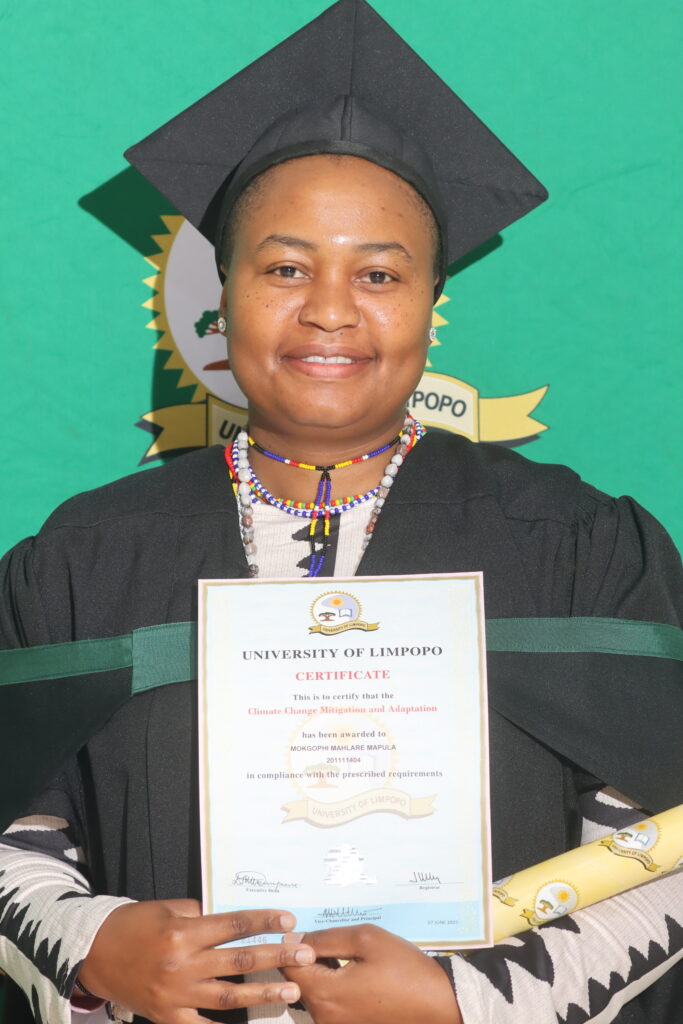
Mapula Mokgophi: PhD student in the Faculty of Science and Agriculture “This short course will help me navigate my research in agricultural soil sciences by considering the global climate crisis and exploring climate-smart and sustainable solutions.”
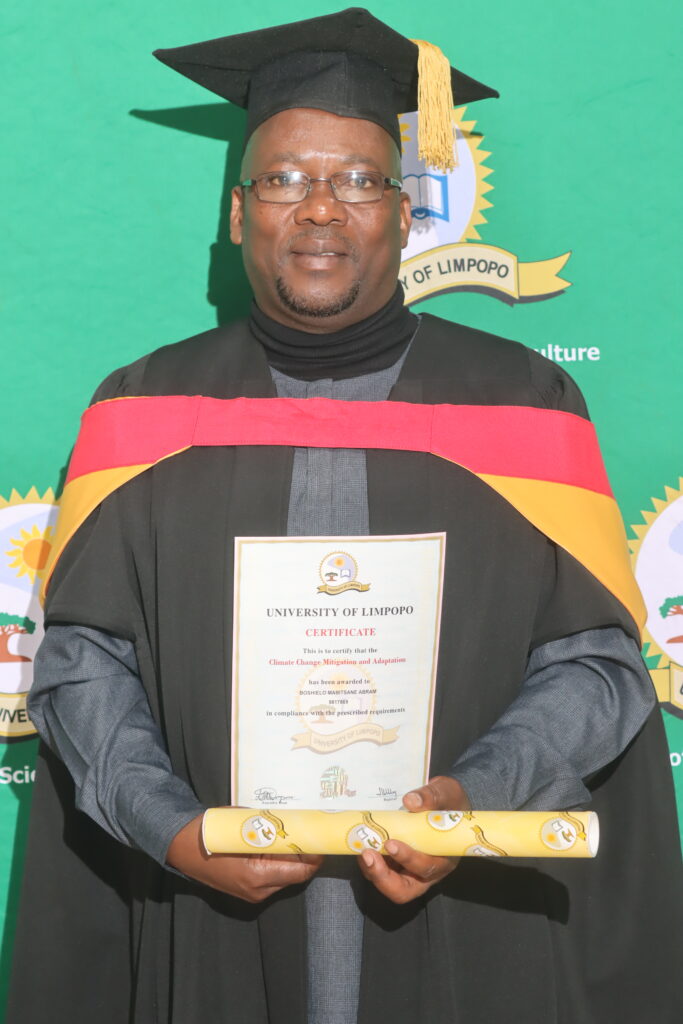
Mabitsane Boshielo: Director of eLearning at UL’s Information Communication Technology “The course has raised my awareness of the earth’s deterioration, largely caused by human actions. It has deepened my understanding of how our activities continue to harm the environment, and highlighted ways to avoid or mitigate the challenges posed by climate change.”