


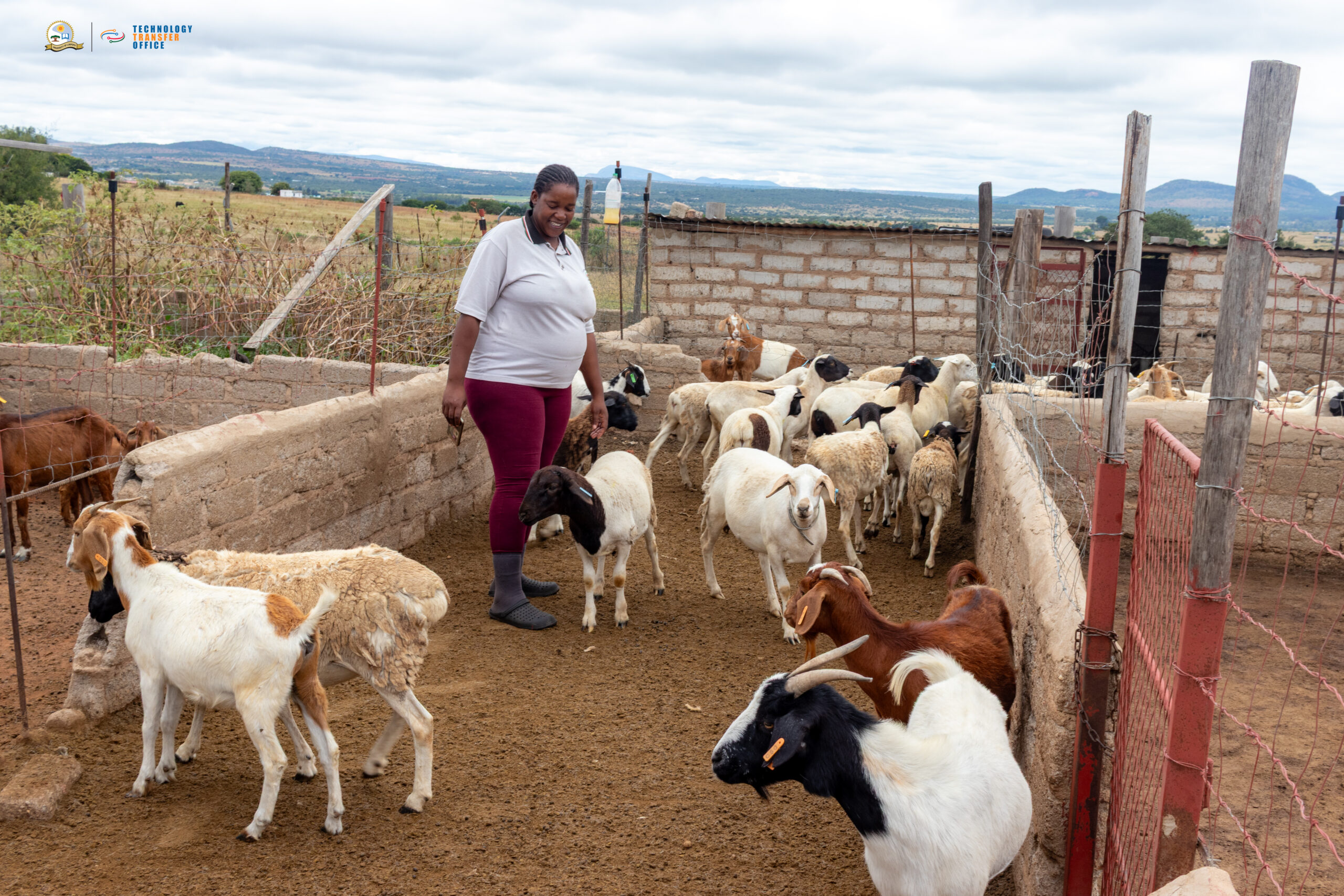
Sheep and goat farmer Raesetsa Poopedi at her farm in Leeuwkuil under Polokwane Local Municipality, reflecting on how the TTO incubation programme helped her expand and better manage her livestock enterprise. Photos: Tlou Manaka
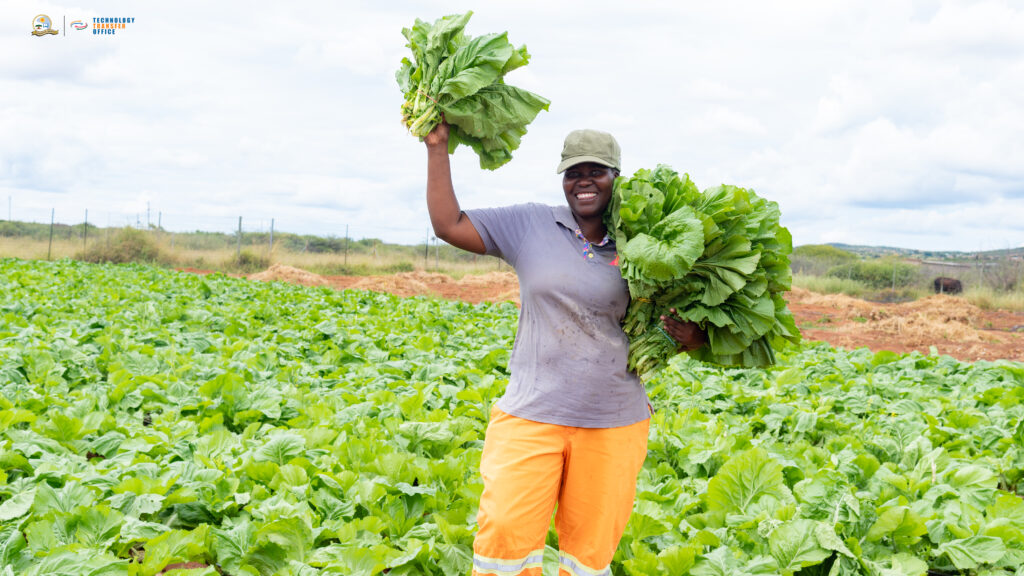
Rejoice Mamabolo with some of her harvest at Mafulong Agri Projects in Ntsima, under the Polokwane Local Municipality, where she now runs a more structured farming operation after participating in the TTO incubation programme.
University of Limpopo Technology Transfer Office equips emerging farmers with business and production skills
By David Mmatli – ulpublications@ul.ac.za
Local farmers in Limpopo are benefiting from improved yields through the Technology Transfer Office (TTO) Incubation Programme at the University of Limpopo (UL), in partnership with CHIETA , which provides valuable training and support to emerging farmers
The programme, which took place during the 2024/2025 financial year, was designed to empower emerging farmers in the Mankweng and Polokwane areas with critical skills in financial management, farm operations and business development. This initiative has enabled them to transform small-scale farming into sustainable businesses.
To assess the impact of the programme, UL’s TTO recently conducted a week-long monitoring visit to participating farms, accompanied by potential funders such as Core Energy, Polokwane Local Municipality, NTK and Limpopo Department of Social Development, interested in supporting the farmers’ growth.
The visits revealed encouraging progress, with several farmers expanding their operations, improving record-keeping systems and adopting more sustainable farming practices.
One of the beneficiaries, Raesetsa Poopedi, a sheep and goat farmer based in Leeuwkuil along the Percy Fyfe Road, credits the incubation programme with helping her transform the way she manages her farm.
“The programme taught me that farming must be managed like a business. You must record everything and ensure that your income exceeds your expenses,” she said.
Poopedi explained that she has applied many of the techniques learned during the programme, including innovative feeding strategies and better financial planning.
“Everything on the farm is useful. I now plant vegetables that can also be used as supplements for my animals. If they are not marketable, I feed them to my livestock,” she said.
Currently, Poopedi manages 72 goats and 51 sheep, demonstrating steady growth since joining the programme.
Another beneficiary, Rejoice Mamabolo, who runs Mafulong Agri Projects in Ntsima, under the Polokwane Local Municipality, specialises in producing seedlings including onion, beetroot, maize and spinach.
Before joining the incubation programme, Mamabolo operated a small household garden. Through the training and mentorship received, she has since developed her farming activity into a more structured business.
“Before joining the programme I only had a small garden at home. Now I run my farm professionally and it has created an income for my family,” she said.
Mamabolo also noted that the programme introduced her to the concept of bootstrapping — building a business using available resources while gradually scaling operations.
Despite challenges such as hailstorms that damaged her spinach crops, she remains optimistic and plans to focus on scaling the production of a single crop to maximise profitability over the next year.
The farm visits provided TTO and potential funders with an opportunity to evaluate the progress of participating farmers and explore future support mechanisms.
Pull-out quote
“The programme taught me that farming must be managed like a business. You must record everything and ensure that your income exceeds your expenses.”
Technology Transfer Office officials and potential funders visit one of the farms that benefited from
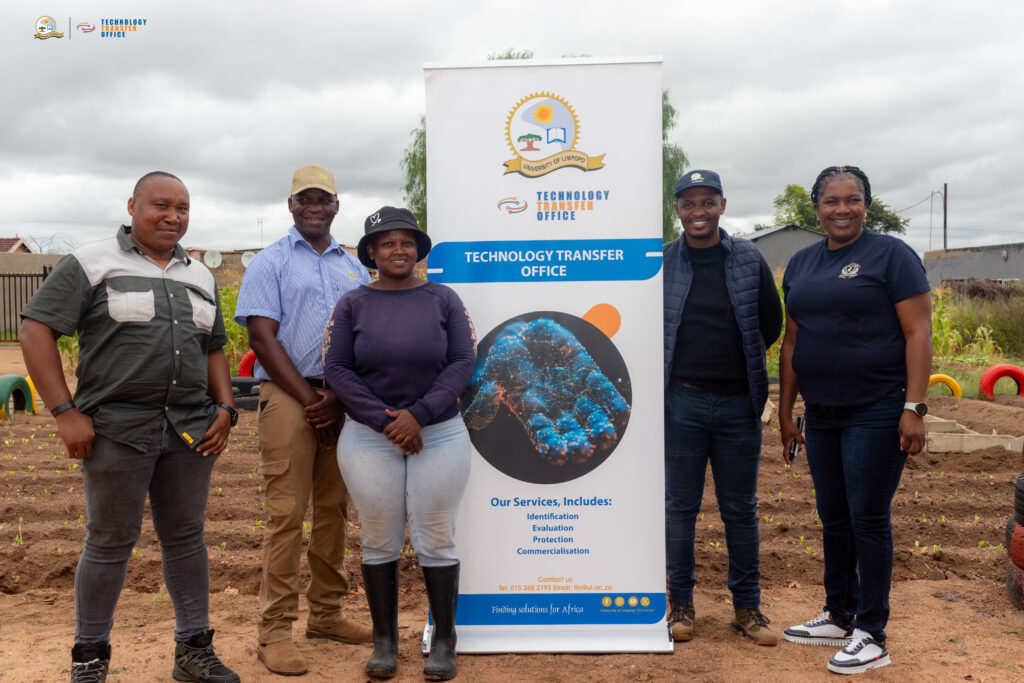
the University of Limpopo’s TTO incubation programme.