


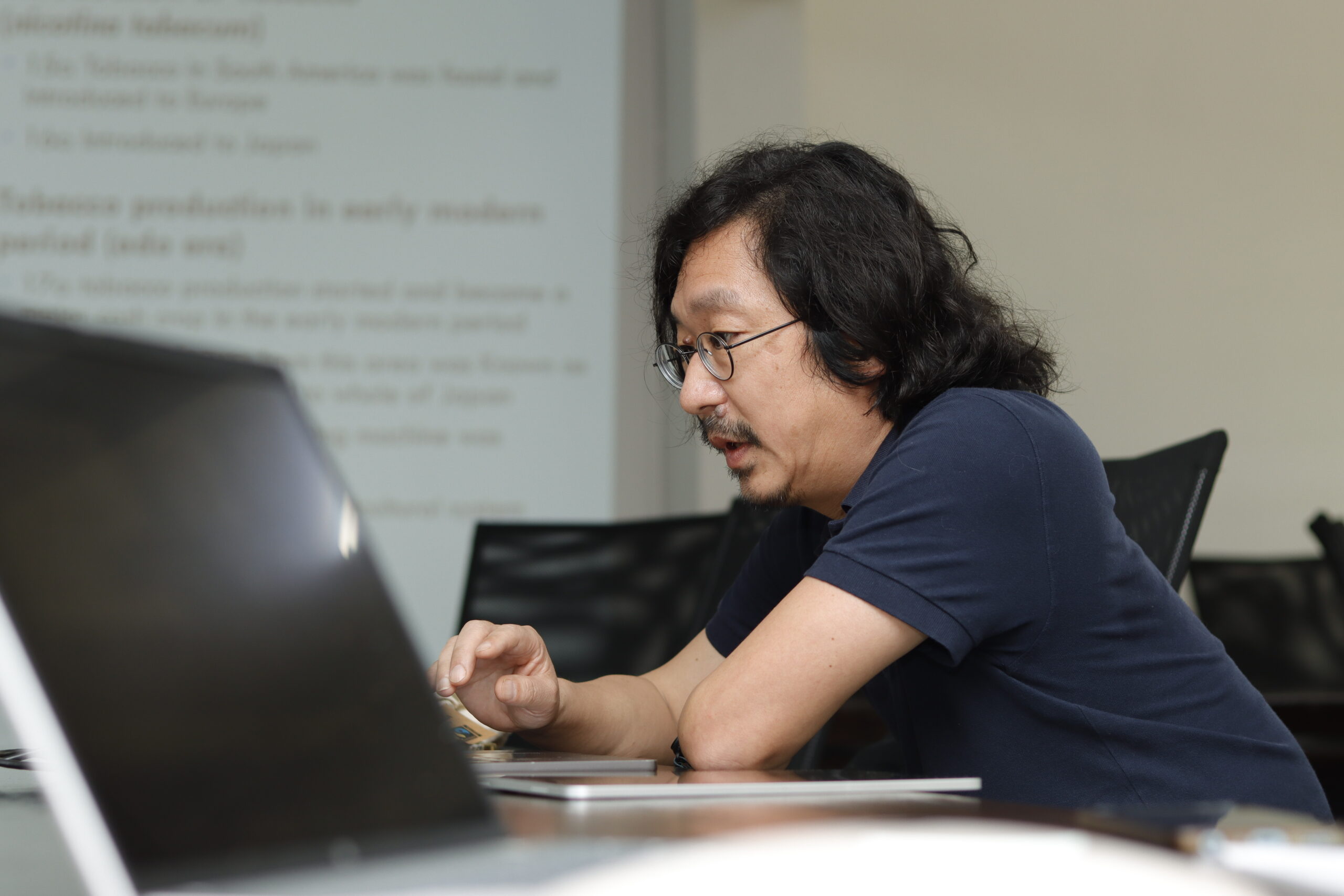
Prof Naoki Naito from Tokushima University presents his research on millet and agricultural heritage systems during a seminar at the University of Limpopo. Photos: Forgive Hlungwani
Visit by Tokushima University researcher, Prof Naoki Naito’s, opens new opportunities for interdisciplinary research, student exchange and sustainable agriculture innovation
By Maaba Lesego & Rinae Manenzhe – ulpublications@ul.ac.za
The University of Limpopo (UL) is strengthening its global research partnerships following a strategic visit by Prof Naoki Naito from Tokushima University in Japan, aimed at advancing collaborative research on millet production, food security and sustainable agriculture
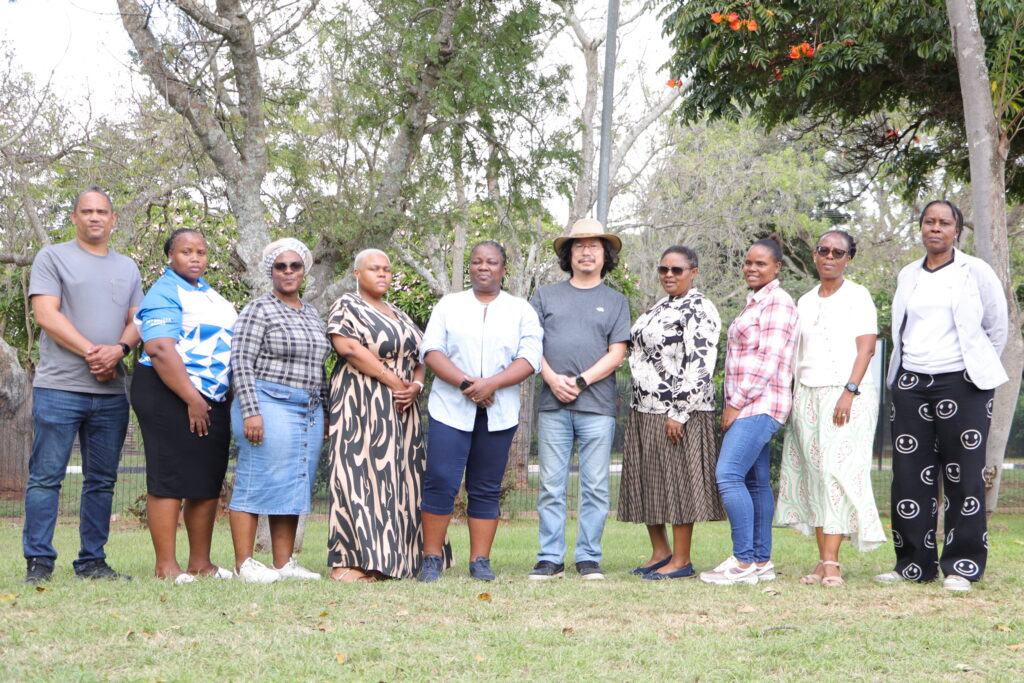
Prof Naito’s visit forms part of ongoing discussions among researchers from the Faculties of Science and Agriculture, Health Sciences and Humanities at UL, who are collaborating to develop an interdisciplinary project aimed at revitalising indigenous millet production and consumption in South Africa.
The initiative seeks to explore how indigenous crops such as millet can contribute to addressing food insecurity, malnutrition and the growing burden of non-communicable diseases, while also strengthening climate-resilient farming systems.
During a seminar hosted at the university, Prof Naito shared insights from his work in Japan’s Nishi-Awa Globally Important Agricultural Heritage Systems (GIAHS) region, where he has led efforts to conserve traditional millet farming systems and promote millet-based food cultures.
He explained that the primary aim of his visit was to build a research partnership between Japan and South Africa that connects traditional agricultural knowledge with modern scientific research.
“It is valuable for us to collaborate with colleagues in South Africa to explore how traditional millet farming systems can be revitalised and sustained for future generations,” said Prof Naito.
The collaboration is expected to open new opportunities for joint research projects, knowledge exchange and student collaboration between the two universities.
The engagement brought together UL researchers working on various aspects of millet research, including microbiology, nutrition, agricultural economics and food systems.
The discussions were hosted by Prof Kgabo Moganedi, Professor of Microbiology in the Department of Biochemistry, Microbiology and Biotechnology within the Faculty of Science and Agriculture.
Prof Moganedi explained that the collaboration aims to position millet as an important nutritional and sustainable crop for South Africa.
“Millet is regarded as a superfood because of its high nutrient value and health benefits. If widely adopted as an alternative staple food, it has the potential to help address malnutrition and reduce diseases such as diabetes,” she remarked.
According to Prof Mmapatla Senyolo, Associate Professor in Agricultural Economics at UL, the seminar highlighted the broader significance of preserving indigenous agricultural systems.
“The discussions demonstrated how traditional farming systems can contribute to sustainable development, strengthen rural livelihoods and support climate-resilient food systems,” she said.
For UL, this collaboration marks a significant step in strengthening international research partnerships and expanding the impact of its agricultural and nutrition research.
Through joint studies, academic exchanges and community-based research initiatives, the partnership is expected to enhance UL’s research capacity while contributing to global discussions on sustainable food systems and indigenous crop revitalisation.
“It is valuable for us to collaborate with colleagues in South Africa to explore how traditional millet farming systems can be revitalised and sustained.”

Researchers at the University of Limpopo meet with Prof Naoki Naito to discuss collaborative research on millet revitalisation and sustainable agriculture.