


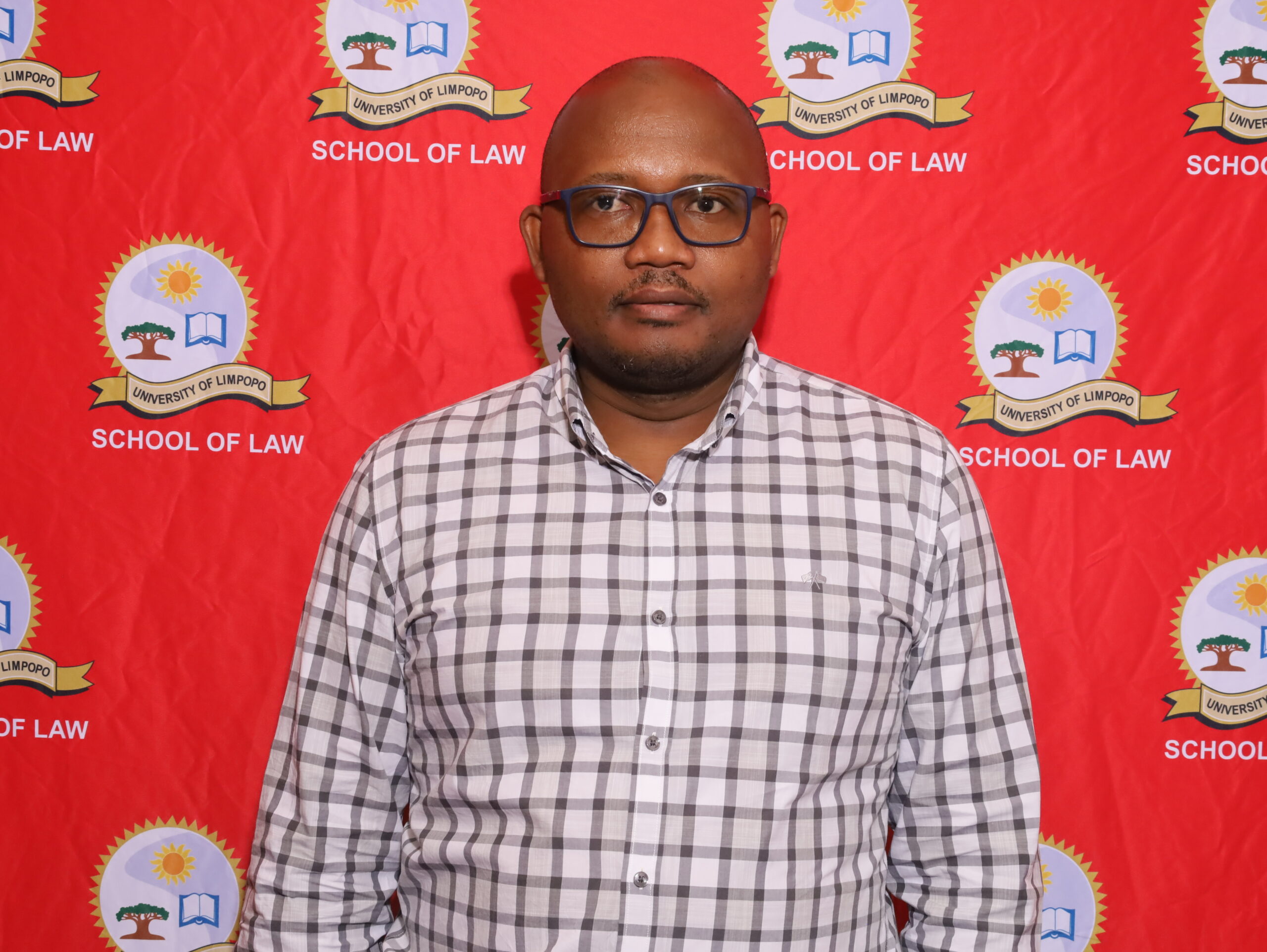
Prof Hoolo ’Nyane, Editor-in-Chief of the Turf Law Journal, also serves as Professor and Head of the Department of Public and Environmental Law at the University of Limpopo.
Formal accreditation strengthens the university’s research stature and opens new opportunities for legal scholars and postgraduate researchers
By Rinae Manenzhe – ulpublications@ul.ac.za
The Turf Law Journal (TLJ), a peer-reviewed scholarly publication of the University of Limpopo’s School of Law, has officially attained accreditation from the Department of Higher Education and Training (DHET) for the 2026/2027 cycle
This milestone represents an important achievement for the institution’s growing research output and academic reputation.
DHET accreditation means that all articles published in the journal are formally recognised for research subsidy allocations. This recognition validates that the publication adheres to stringent national standards relating to academic quality, editorial processes and substantive scholarly contribution. Consequently, for both universities and individual researchers, publication in an accredited journal carries significant academic value and contributes towards institutional research output.
The accreditation follows the journal’s inclusion in the Directory of Open Access Journals (DOAJ), an international database recognised by DHET for journal accreditation and subsidy. Furthermore, the journal is also indexed in African Journals Online (AJOL) and EBSCOhost, further affirming its prestige and intellectual footprint within the international academic community.
Through its listing on AJOL, the journal earned a two-star rating in the Journal Publishing Practices and Standards (JPPS). This distinction is awarded to journals that exceed basic criteria and meet advanced quality standards for publishing.
Established in 2021, the Turf Law Journal is an open-access journal dedicated to providing a platform for legal scholarship that addresses transformative legal issues in South Africa and across the African continent. While the journal’s primary focus remains on South African legal matters, it also encourages comparative and interdisciplinary research from international scholars.
Editor-in-Chief Prof Hoolo ’Nyane described the accreditation as a major step forward for the School of Law.
“This accreditation is a defining milestone that aligns with our vision to establish the School as a premier centre of legal research,” said Prof ’Nyane, who serves as a Professor and Head of the Department of Public and Environmental Law at UL.
“Since its inception in 2021, the journal has experienced consistent growth, attracting submissions from established and emerging scholars both locally and internationally.”
Prof ’Nyane further noted that DHET accreditation will create greater opportunities for postgraduate students and early-career researchers. This is particularly significant as doctoral candidates are increasingly required to publish in accredited journals before graduation.
Lehlogonolo Kgosana, a doctoral candidate in Law at UL, noted that the accreditation strengthens researchers’ confidence in the journal.
“The accreditation of TLJ by DHET confirms that the journal meets recognised standards of academic quality and credibility,” said Kgosana.
“It provides assurance that research published in the journal will be recognised and valued within the academic system. It also motivates young researchers, knowing that their work can reach a wider audience and contribute meaningfully to legal scholarship.”
Publishing in accredited journals is regarded as an important measure of academic excellence, enhancing both the visibility of researchers and the institutional standing of universities. The recognition is also expected to significantly strengthen UL’s overall research profile.
Despite its current success, the journal faced various challenges during its early years, particularly in attracting a sufficient volume of submissions and securing financial support. Prof ’Nyane noted that many established academics are often hesitant to publish in newly established journals, making support from senior scholars important in building credibility during the journal’s formative stages.
Moving forward, the editorial team aims to expand the journal’s international indexing footprint, pursue a direct DHET listing and improve its international ranking. Efforts are also underway to strengthen editorial systems, including peer review and copyediting processes, to maintain high academic standards.