


Dr Petar Petrov, a lecturer in poultry science, and the histology and morphology of farm animals at the Agricultural University-Plovdiv in Bulgaria, shares his expertise during the practical training session. Photos: Dimpho Boshomane
UL and Bulgarian researchers share reproductive biotechnology skills to improve animal breeding, productivity and the conservation of genetic resources
By Phishego Mohubedu -ulpublications@ul.ac.za
Improving livestock breeding and preserving animal genetics took centre stage during a practical workshop hosted by the University of Limpopo’s (UL) Department of Agricultural Economics and Animal Production in partnership with the Agricultural University-Plovdiv in Bulgaria
The workshop focused on the exchange of knowledge and practical skills in reproductive biotechnology, giving postgraduate students and researchers hands-on experience in techniques used in animal breeding, fertility assessment and genetic conservation.

Dr Radka Malinova, a lecturer in animal reproduction, reproductive biotechnology and embryo transfer at the Agricultural University-Plovdiv in Bulgaria.
As part of the workshop, Bulgarian researchers Dr Radka Malinova and Dr Petar Petrov demonstrated, amongst others farming practices, semen collection and evaluation techniques using indigenous poultry breeds during a practical session at UL’s animal Laboratory. The collected samples were analysed using Computer-Assisted Sperm Analysis (CASA) technology to assess sperm quality and fertility.
Dr Malinova, a lecturer in animal reproduction, reproductive biotechnology and embryo transfer at the Agricultural University-Plovdiv, said semen collection has several applications in animal production.
“Semen collection is used for artificial insemination, fertility evaluation, research and the conservation of valuable genetic resources,” highlighted Dr Radka Malinova.
She added, “reproductive techniques are important for breeding programmes and the preservation of animal genetics for future generations. The knowledge is particularly relevant in livestock production, where farmers continue to deal with disease and difficult environmental conditions.”
The workshop allowed participants to see how reproductive biotechnology can be used to select and breed animals with desirable traits. It is said that this can contribute to improved fertility, animal performance and the preservation of indigenous breeds.
Students were also exposed to commercial livestock production during a visit to ZZ2 in Mooketsi, where they learnt about the PinZyl cattle breed. Developed from Pinzgauer and Tuli cattle, the breed is known for its hardiness, disease resistance and ability to perform under African conditions.
Professor Thobela Louis Tyasi, Full Professor in Animal Production at UL, said the workshop was important because it linked laboratory training with the realities of livestock farming.
“Partnerships such as this allow students to see how laboratory science translates into practical solutions that improve productivity and sustainability in the agricultural sector,” said Prof Tyasi.
He said exposing postgraduate students to international researchers and innovative practices in commercial farming operations broadens their understanding of animal production and gives them practical knowledge that can be applied in their research.
The partnership with the Agricultural University-Plovdiv also creates opportunities for researchers to exchange knowledge on animal genetics and reproductive technologies. For UL students, the workshop provided access to specialised techniques and expertise that can strengthen their postgraduate research.
According to Thankge Kholofelo, a Master’s candidate in Animal Production, livestock farmers are under increasing pressure to improve productivity while preserving animal genetic resources.
“The workshop demonstrated how research and practical training can help develop animals that are more productive and better adapted to local conditions.”
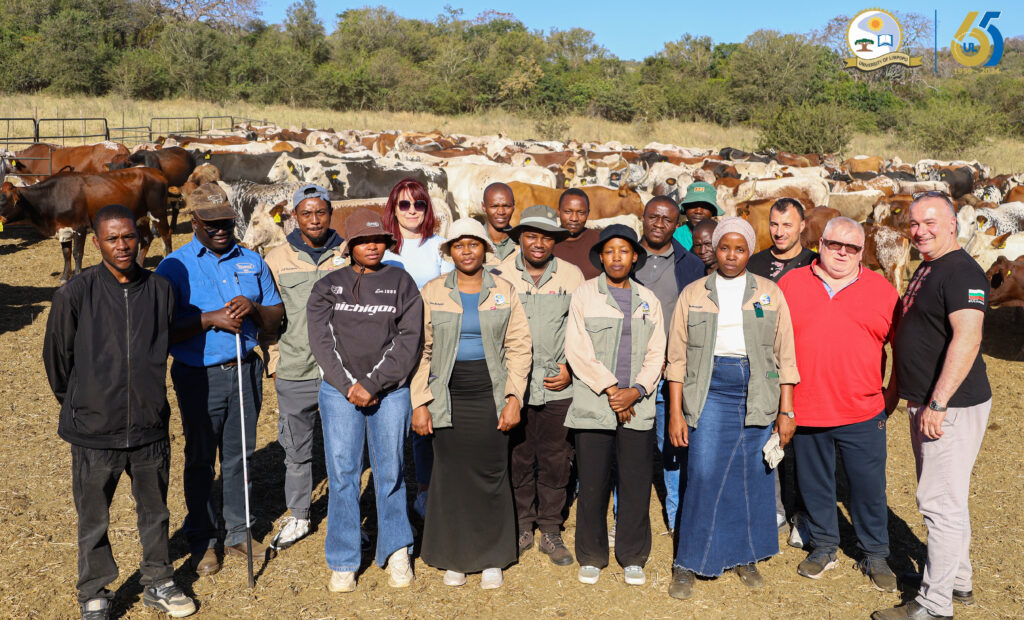
University of Limpopo Animal Production postgraduate researchers and Bulgarian researchers visit the ZZ2 cattle farm in Mooketsi to learn about best practices in commercial livestock production and breeding practices.
“Partnerships such as this allow students to see how laboratory science translates into practical solutions that improve productivity and sustainability in the agricultural sector.”