


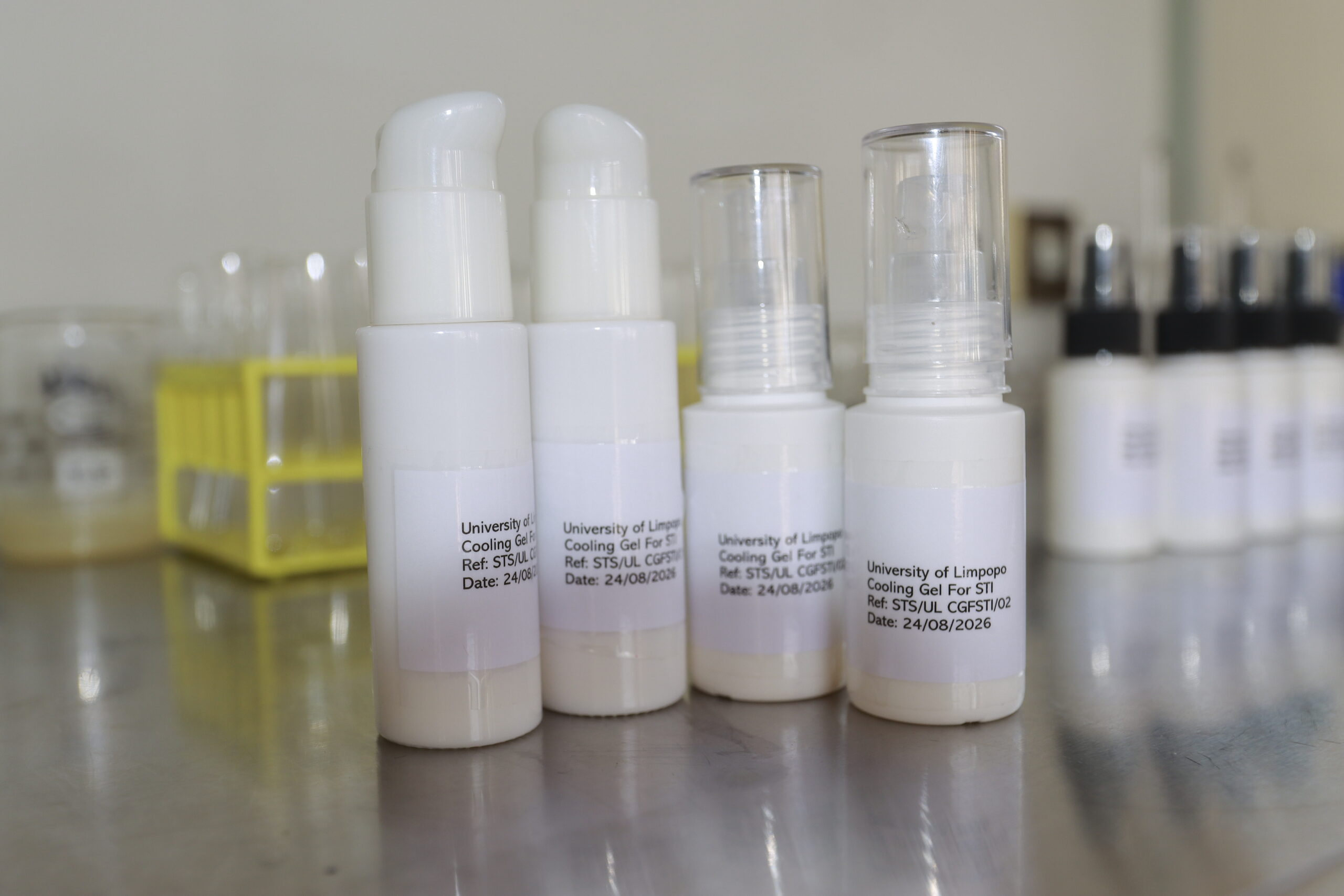
Prototype formulation samples of Plant A and Plant B, used by Prof Mamokone Mahlo to develop prototype herbal gel and tonic formulations for ‘U wela’. Photos: Reuben Maake
Professor Mamokone Mahlo is developing herbal gel and tonic prototypes in a bid to tackle ‘U wela’, a little-understood condition traditionally reported among men in Limpopo’s Vhembe District
By Reuben Maake – reuben.maake@ul.ac.za
For generations, medicinal plants have been used in traditional communities to treat a range of ailments. Now, traditional knowledge is being put to scientific testing in the search for a treatment for ‘U wela’. This traditional condition primarily reported among Venda men in the Vhembe District of the Limpopo province is locally believed to have potentially fatal consequences if left untreated
At the centre of the research is Professor Mamokone Mahlo, a C2-rated National Research Foundation Researcher in the Department of Biodiversity at the University of Limpopo (UL). She has developed prototype herbal formulations; a gel and a tonic using medicinal plants identified for their potential to treat the condition.
The research is funded by the Technology Innovation Agency, which has provided R890,000 towards the Herbal Formulation for ‘U wela’ project.
Prof Mahlo identifies key physical symptoms associated with ‘U wela’ as weight loss, dry mouth, a prominent vein on the forehead and swelling of the genital area.
“These infections are caused by microorganisms such as bacteria and fungi that occur on the skin or near the mucous membranes of the genital region,” she highlighted.
Prof Mahlo’s team collected medicinal plants in the Capricorn District. With the assistance of an expert traditional-knowledge collaborator, the plants were identified and subjected to phytochemical, microbiological and pharmacological analyses.
The research has progressed to formulation development, with extracts from two plants, referred to as Plant A and Plant B, used to produce the gel and tonic prototypes.
Laboratory tests found that extracts from both plants showed no cytotoxic effects on Vero cells at the concentrations tested.
Further analyses were conducted on the final extracts to assess their biological properties and suitability for formulation.
Although these findings led to the development of the prototype formulations, Prof Mahlo cautioned that the work has not yet yielded a finished treatment. She stated that Plant A and Plant B represent highly promising botanical candidates for discovering and developing innovative therapeutic agents for the treatment of “U wela’ in humans.”
Both the gel and tonic are currently undergoing vigorous efficacy and stability testing. Additional testing will be required before clinical trials can determine their safety and effectiveness in humans.
Furthermore, Prof Mahlo noted that more scientific research into ‘U wela’ is essential because information about the condition remains limited and poorly documented in the province.
“Further scientific investigation is needed to better understand the condition and to evaluate the potential use of traditional medicines for its management and treatment,” she said.
If the formulations are proven safe and effective and receive the necessary intellectual property protection, Prof Mahlo plans to commercialise the gel and tonic at an affordable price.
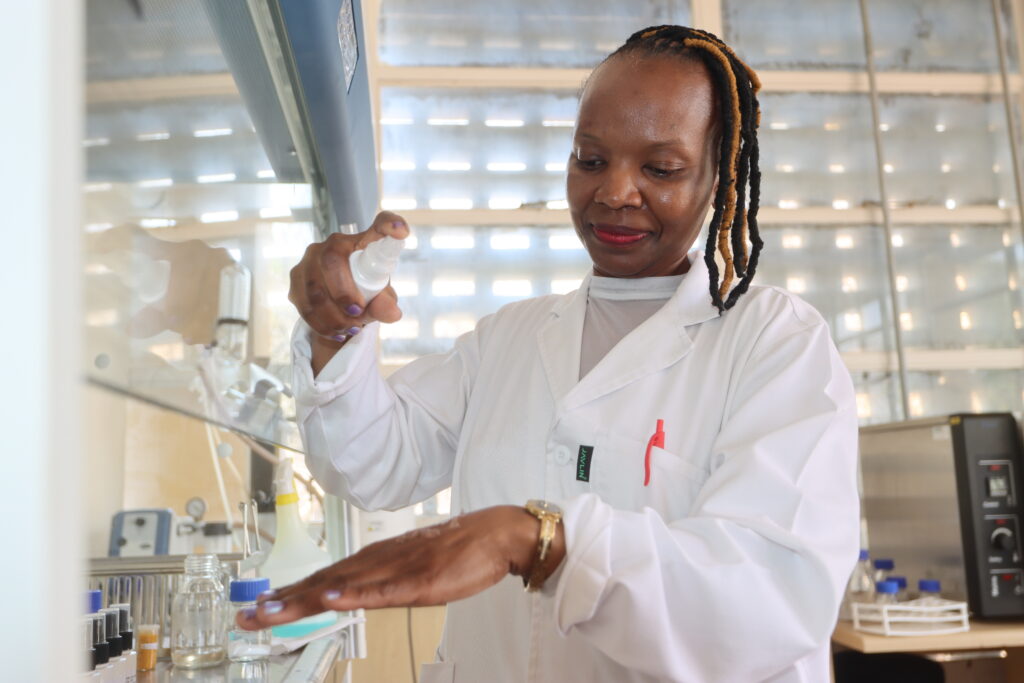
Prof Mamokone Mahlo works on a prototype gel as part of research into a potential treatment for ‘U wela’, a condition traditionally reported among men in Vhembe District, Limpopo.
“Further scientific investigation is needed to better understand the condition and to evaluate the potential use of traditional medicines for its management and treatment.”