


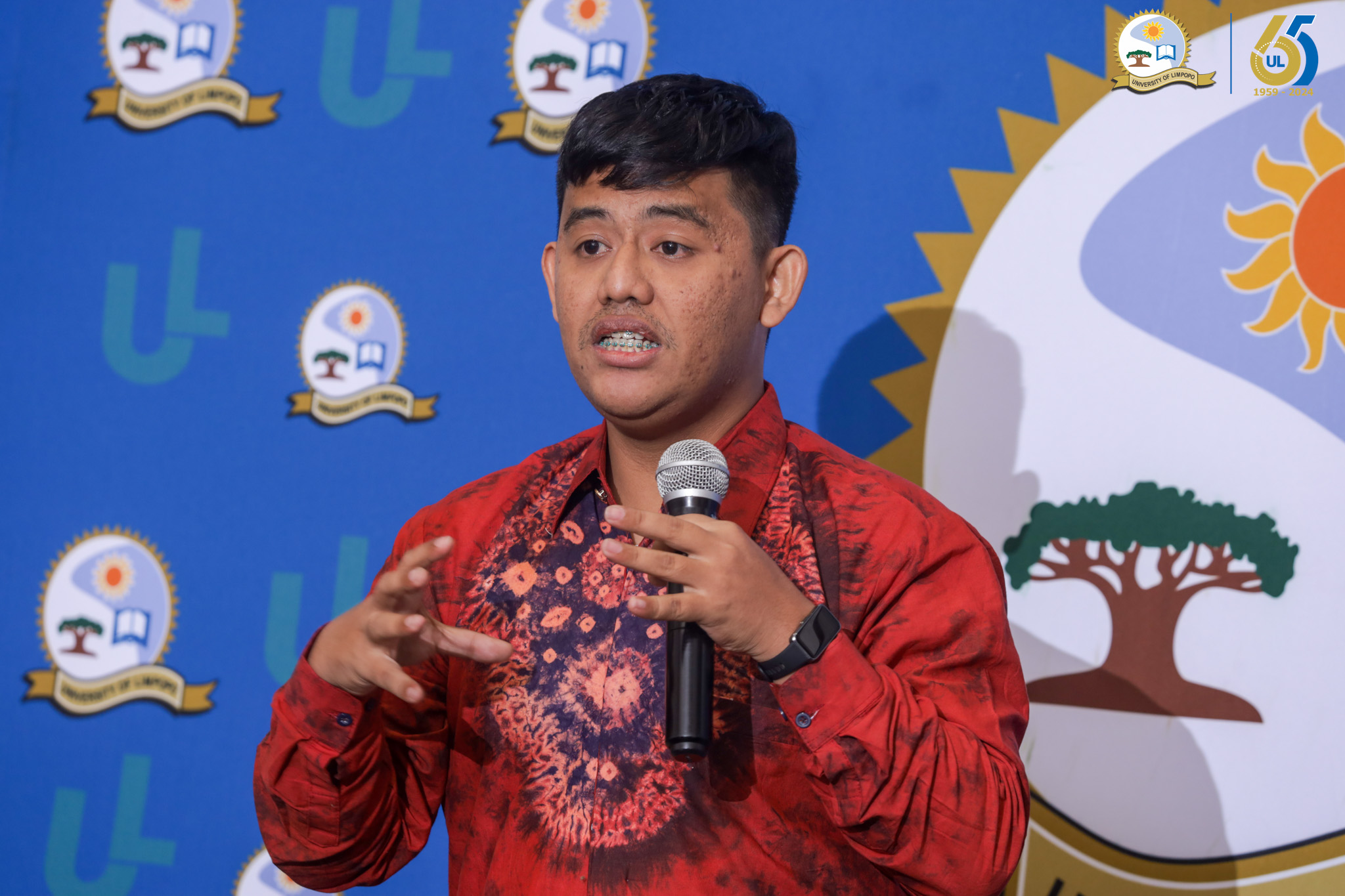
Dr Duano Sapta Nusantara from Universitas Jambi, Indonesia, delivers a presentation on Realistic Mathematics Education during a two-day international seminar at UL.
Dr Duano Sapta Nusantara says teaching mathematics through real-life situations can improve understanding, critical thinking and learner participation
By Lesego Maaba – ulpublication@ul.ac.za
According to Dr Duano Sapta Nusantara, mathematics becomes easier to understand when learners can connect it to situations they experience in everyday life
Dr Nusantara delivered a keynote address at an international guest lecture and research seminar hosted by the University of Limpopo’s (UL) Department of Mathematics, Science and Technology Education (DMSTE) in the School of Education, Faculty of Humanities.
His address centred around “Transforming Mathematics Learning through Realistic Mathematics Education: Theory and Classroom Practice”. He emphasised that Realistic Mathematics Education (RME), an approach that uses real-life situations to help learners understand mathematical concepts, is important to yield desired outcomes in mathematics teaching.
The renowned mathematics scholar from Universitas Jambi in Indonesia said mathematics teaching should move beyond memorising formulas and procedures; and allow learners to understand how mathematical concepts relate to the world around them.
“Realistic Mathematics Education connects mathematics learning with real-life situations to improve learners’ understanding, critical thinking and classroom participation.”
Dr Nusantara demonstrated how teachers can use familiar situations and practical problems to introduce mathematical concepts. Through this approach, learners are anticipated to think, discuss and develop ways of solving problems instead of simply following prescribed steps.
He said RME could help address some of the challenges facing mathematics education by making classroom lessons more meaningful to learners and encouraging their participation.
The two-day seminar brought together key role players comprising of DMSTE lecturers, postgraduate students, researchers, academics and Mathematics Senior Education Specialists from the Limpopo Department of Education. It provided the participants with a platform to discuss mathematics teaching methods and research areas that could contribute to improving classroom practice.
Dr Nusantara also spoke about the link between mathematics education and research, particularly the role of postgraduate students and academics in producing research that can improve teaching.
“Many postgraduate students complete their studies without publishing even one article from their research. This seminar aims to bridge that gap by equipping emerging researchers with practical skills to write quality literature review papers, prepare publication-ready manuscripts and improve their chances of publishing in high-impact journals,” he said.
Professor Kgaladi Maphutha, an Associate Professor and Postgraduate Coordinator at DMSTE, said the Department invited Dr Nusantara because of his experience in mathematics education and academic publishing. She said the seminar was intended to expose postgraduate students to different approaches to mathematics teaching while improving their research and writing skills.
“We also wanted to introduce our postgraduate students, especially master’s students, to RME so that they can apply it in classroom practice and build on it during their PhD studies to improve mathematics education in South Africa,” Prof Maphutha said.
She added that the Department wants students and lecturers to turn their research into published work and contribute to discussions on mathematics education.
The seminar also created an opportunity for university academics and education specialists to share experiences on mathematics teaching in schools. Masters and PhD students actively engaged in the workshop by asking insightful questions and sharing their reflection on the key lessons they took away from the seminar.
One of the postgraduate students, Patience Mashabela, said the workshop exposed participants to innovative teaching approaches and encouraged them to apply these methods in their research and academic work.
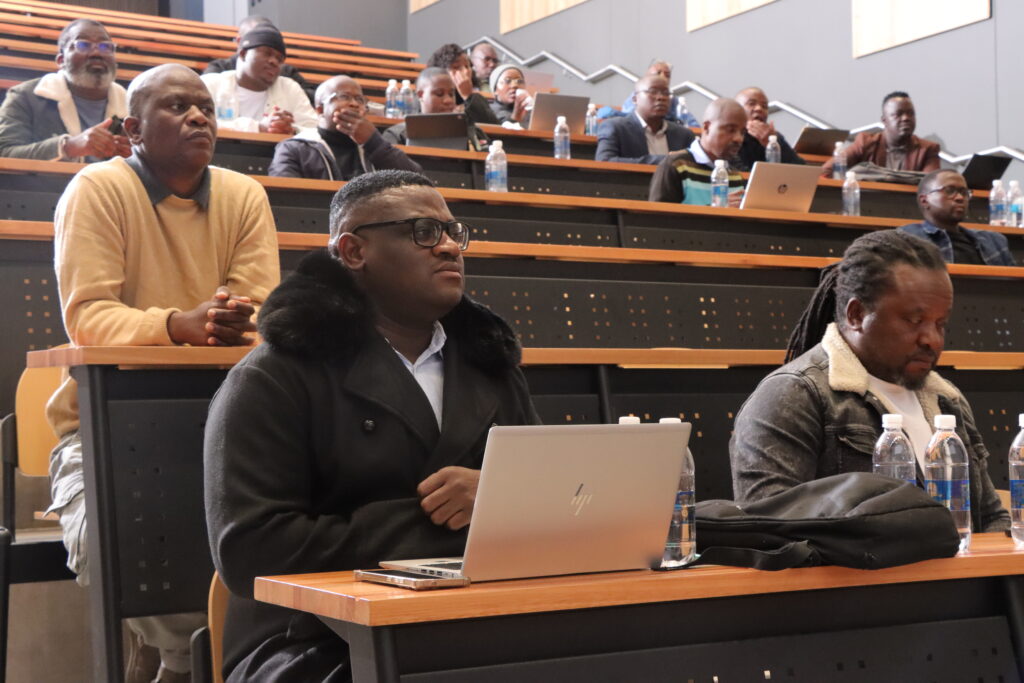
Government employees, academics, researchers, educators and postgraduate students exchange ideas and discuss teaching approaches aimed at improving mathematics education.
“Realistic Mathematics Education connects mathematics learning with real-life situations to improve learners’ understanding, critical thinking and classroom participation.”