


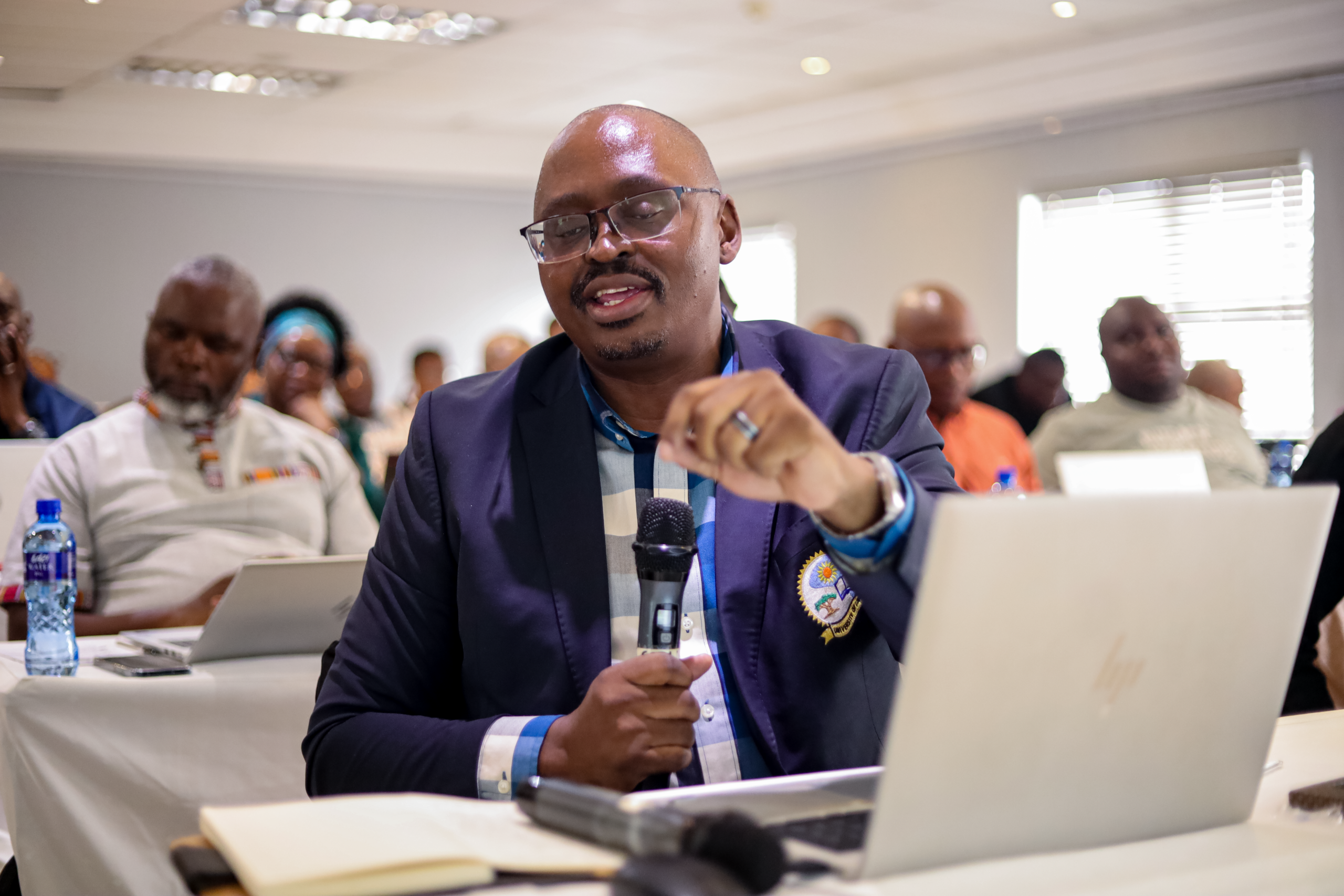
University of Limpopo Executive Management, Deans, School Directors, Heads of Departments and support divisions participate in a leadership and management workshop focused on strengthening the University’s academic project. Photos: Frans Nkhapele
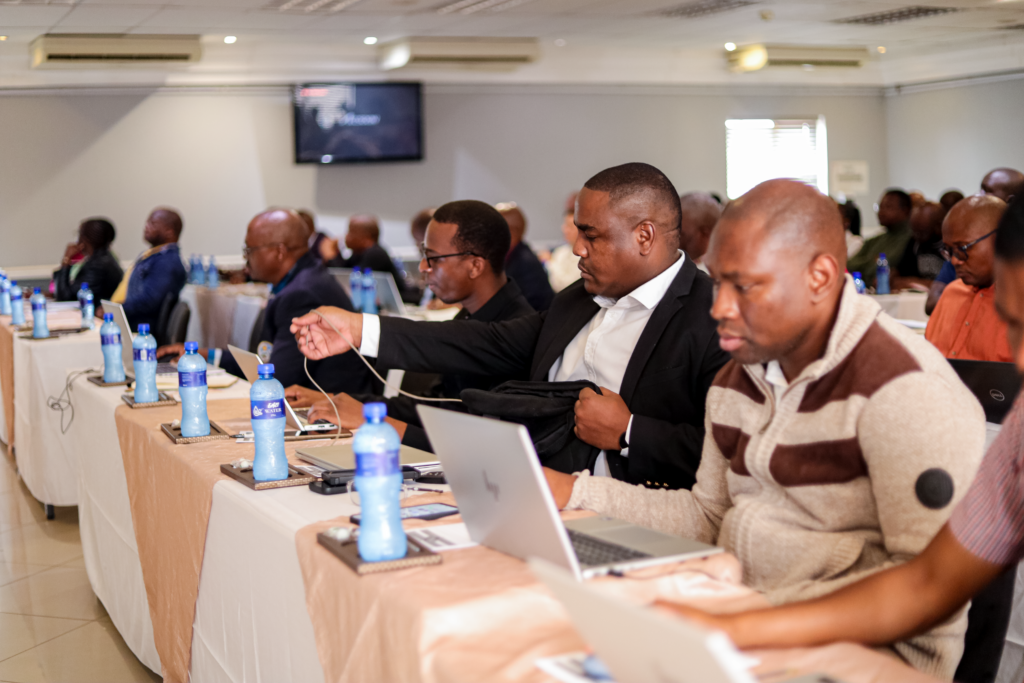
Executive management, support structures and HoDs align on teaching, research and institutional leadership priorities for 2026
By Malatji Monyelegwete – malatji.monyelegwete@ul.ac.za
Following the commencement of the 2026 academic year, the University of Limpopo (UL) convened a Leadership and Management of the Academic Project Workshop aimed at strengthening strategic alignment in advancing the university’s academic mandate
The workshop was attended by UL Executive Management, School Directors, Heads of Departments (HoDs) and representatives from support divisions. It sought to promote coordinated leadership across the institution and ensure that teaching and learning, research and community engagement are effectively supported and managed.

Dr Jeffrey Mabelebele, Vice-Chancellor and Principal of UL, delivering the opening address during the Leadership and Management of the Academic Project Workshop.
Opening the workshop, Dr Jeffrey Mabelebele, Vice-Chancellor and Principal of UL, underscored the collective responsibility of all leadership structures in safeguarding the institution’s core academic mission.
“All of us must do everything in our power to ensure that the academic project of the University is fully supported and functions effectively,” said Dr Mabelebele.
He emphasised that strong academic leadership requires deliberate efforts to give institutions intellectual direction. Added to the latter, he stressed that this can be achieved through sound management, financial oversight and accountability, particularly at departmental level.
Addressing the responsibilities of Heads of Departments, Dr Mabelebele called for proactive student support mechanisms, recognition of high-performing students and responsible resource management. He further highlighted the importance of effective people management and collaborative leadership to ensure institutional stability and sustained academic excellence.
“The success of the academic project depends on how well we work together across all levels of the institution,” he noted.
One of the central sessions focused on quality teaching and learning, presented by Executive Dean of the Faculty of Humanities, Prof Satsope Maoto.
Prof Maoto emphasised that universities must continuously adapt their teaching approaches to enhance student success, retention and graduate employability.
She noted that effective teaching methods requires moving beyond traditional lecture-based models towards student-centred, evidence-based approaches that integrate technology, promote critical thinking and respond to diverse learning needs.
“Quality teaching is a collaborative endeavour that requires responsive leadership, strong academic development support and continuous curriculum renewal,” she said.
Her presentation addressed key issues including curriculum relevance, student-centred pedagogy, staff development and flexible learning delivery modes, prompting active engagement from participants.
The workshop also reinforced the university’s research ambitions, with Prof Tebogo Mothiba, Acting Deputy Vice-Chancellor: Research, Innovation and Partnerships, highlighting the strategic importance of research as a core pillar of the institution.
She emphasised that the integration of research, teaching and community engagement, stands to position UL as an African-centred institution, while enabling its growth globally on research relevance.
Meanwhile, Prof Mothiba outlined the University’s research priorities under the Strategic Plan and the Research and Innovation Strategy 2026–2030, aimed at improving research productivity, global rankings and societal impact.
She called on academic leaders to cultivate an enabling research environment through writing retreats, collaborative projects, interdisciplinary research and structured postgraduate support systems.
Infrastructure and technical support were also highlighted as critical enablers of the academic project.