


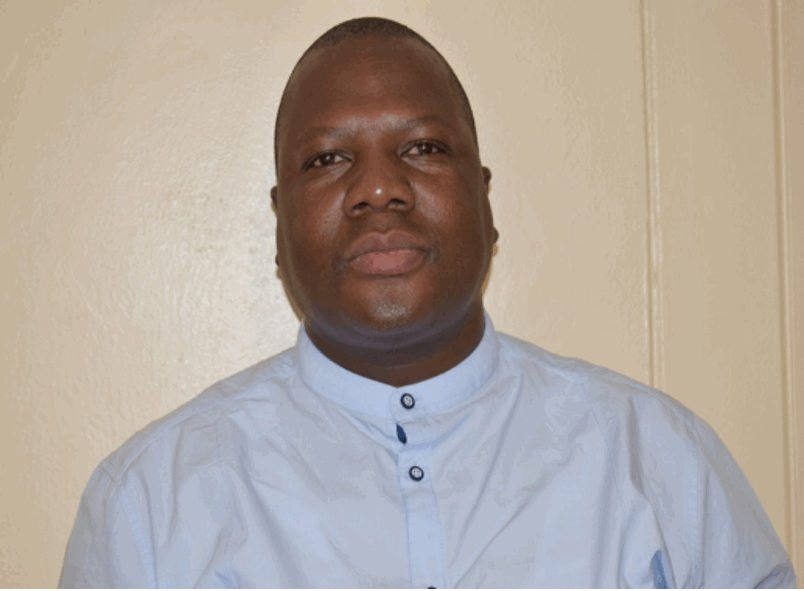
Prof Maupi Letsoalo, Academic Development Practitioner at the University of Limpopo, recently elected as a full member and evaluator of SAHPRA’s Clinical Trials Committee.
Prof Maupi Letsoalo’s election to the SAHPRA Clinical Trials Committee accentuates the University of Limpopo’s (UL) growing influence in professional bodies and regulatory boards
By Caroline Khoza – ulpublications@ul.ac.za
Prof Maupi Letsoalo currently serves as Academic Development Practitioner at the Centre for Academic Excellence at UL, and has been elected as a full member and evaluator of the South African Health Products Regulatory Authority (SAHPRA) Clinical Trials Committee (CTC)
The CTC is a specialised scientific advisory structure within SAHPRA, tasked with ensuring that clinical trials conducted in South Africa meet rigorous scientific, ethical, and regulatory standards. Prof Letsoalo will serve a three-year term as a biostatistician, contributing to the review and oversight of clinical trial applications before approval.
His appointment not only reflects personal excellence, but it also highlights the strategic role UL academics play in shaping national policy, safeguarding public health, and strengthening regulatory systems through evidence-based expertise.
Reflecting on his election, Prof Letsoalo described serving on the Committee as “a high level of recognition and trust in one’s expertise”. For many in his field, he noted, it is a career-defining milestone.
He added, “This appointment is not only a personal milestone, but a reflection of UL’s growing contribution to national scientific governance and regulatory excellence.”
“This appointment is not only a personal milestone, but a reflection of the University of Limpopo’s growing contribution to national scientific governance and regulatory excellence.”
At the intersection of science, ethics, and regulation, Prof Letsoalo’s role involves reviewing study designs, evaluating sample sizes and statistical power, assessing statistical analysis plans, and examining risk-benefit considerations to ensure participant safety and data integrity. He emphasised that poorly designed trials not only have technical shortcomings but also carry serious ethical implications, particularly when human participants are involved.
He described the appointment as both an honour and a demanding responsibility, requiring continuous learning, critical engagement with emerging methodologies, and staying abreast of evolving regulatory standards.
Beyond professional recognition, he said the role instills a deep sense of accountability to the public. He contends that engaging with leading experts across disciplines fosters intellectual discipline and humility, while reinforcing his commitment to advancing high-quality, ethical research.
As UL continues to expand its research output and national partnerships, appointments such as this demonstrate how its academics are not only producing knowledge but actively shaping the standards that govern it.