


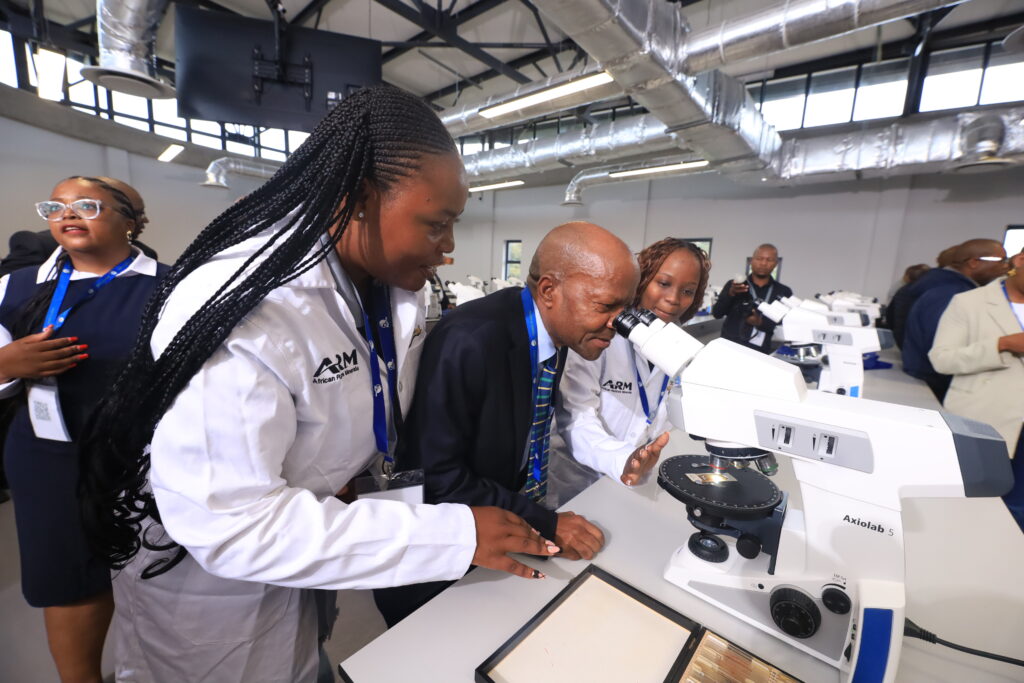
Head of Department of Geology and Mining, Dr Maropene Rapholo (wearing glasses), leads a site tour of the newly furnished laboratories.
R5 million investment strengthens research capacity, student training and industry collaboration at the University of Limpopo
By Johannes Selepe – Mosela.selepe@ul.ac.za
The University of Limpopo (UL), in partnership with African Rainbow Minerals (ARM), has officially launched newly upgraded laboratories, marking a significant milestone in advancing scientific infrastructure and research capacity
The launch forms part of a five-year Memorandum of Understanding (MoU), signed in 2025 between the two institutions, aimed at strengthening collaboration in teaching, research, infrastructure development and student support within the Faculty of Science and Agriculture. The partnership brings together the Department of Geology and Mining, and the Department of Geography and Environmental Studies at UL, reflecting a shared commitment to advancing Earth Sciences education and research in Limpopo Province and across South Africa.
With a R5 million investment from ARM, a diversified mining and minerals company operating across South Africa, modern laboratory facilities have been installed within the University’s Earth Science Building. The partnership has already created meaningful opportunities, with 18 students receiving bursaries, alongside the donation of computers, petrographic microscopes and the establishment of specialised laboratories.
These include the ARM Microscope Laboratory, equipped with 24 petrographic microscopes for hands-on training in mineralogy and petrology; the ARM Research Laboratory, a dedicated postgraduate computer lab supporting data analysis and specialised geological software; and the ARM Computer and Innovation Laboratory, featuring 80 desktop computers to enhance undergraduate learning through digital modelling and simulations in mining.
Speaking at the launch, ARM Chief Executive Officer, Phillip Tobias, emphasised the importance of industry partnerships in advancing higher education and fostering national development.
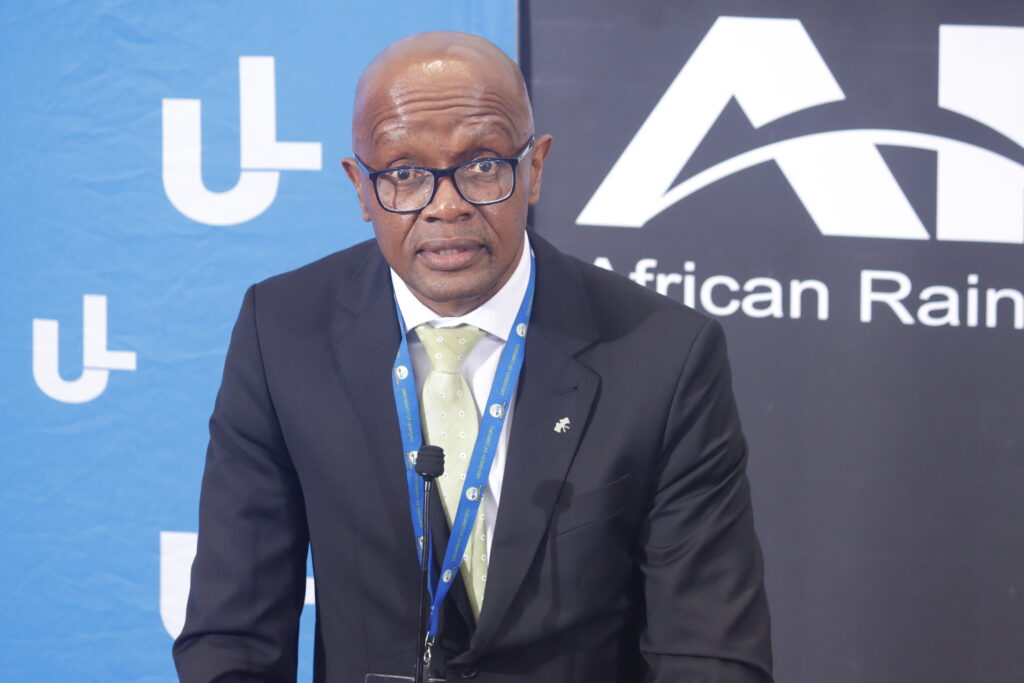
“Partnerships between industry and universities are essential for building the skills pipeline our country needs. By investing in institutions like UL, we are not only supporting education but also contributing to innovation, research and the long-term sustainability of our economy,” he said.
He added that collaboration between academia and industry ensures graduates are better prepared for the workforce.
“When industry and universities collaborate, we can align academic training with real-world demands. This enables us to produce graduates who are not only qualified but also equipped with practical skills that can immediately benefit the economy,” Tobias noted.

UL Vice-Chancellor and Principal, DrJeffrey Mabelebele, underscored the broader significance of the partnership in promoting sustainable development, capacity building and institutional transformation.
“This partnership reflects our commitment to finding solutions for sustainable development. By enhancing our infrastructure and research capacity, we are creating an enabling environment for innovation that directly addresses the needs of our communities and the nation,” he said.
Dr Mabelebele emphasised that the collaboration extends beyond infrastructure development, positioning the University as a catalyst for transformation and knowledge production.
The new laboratories will provide students with access to advanced analytical tools and technologies, facilitating hands-on learning and enhancing their readiness for careers in the mining and environmental sectors. At the same time, the facilities will support cutting-edge research and innovation, positioning UL as a key contributor to scientific progress in Limpopo and beyond.
“Partnerships between industry and universities are essential for building the skills pipeline our country needs. By investing in institutions like UL, we are not only supporting education but also contributing to innovation, research and the long-term sustainability of our economy.”