


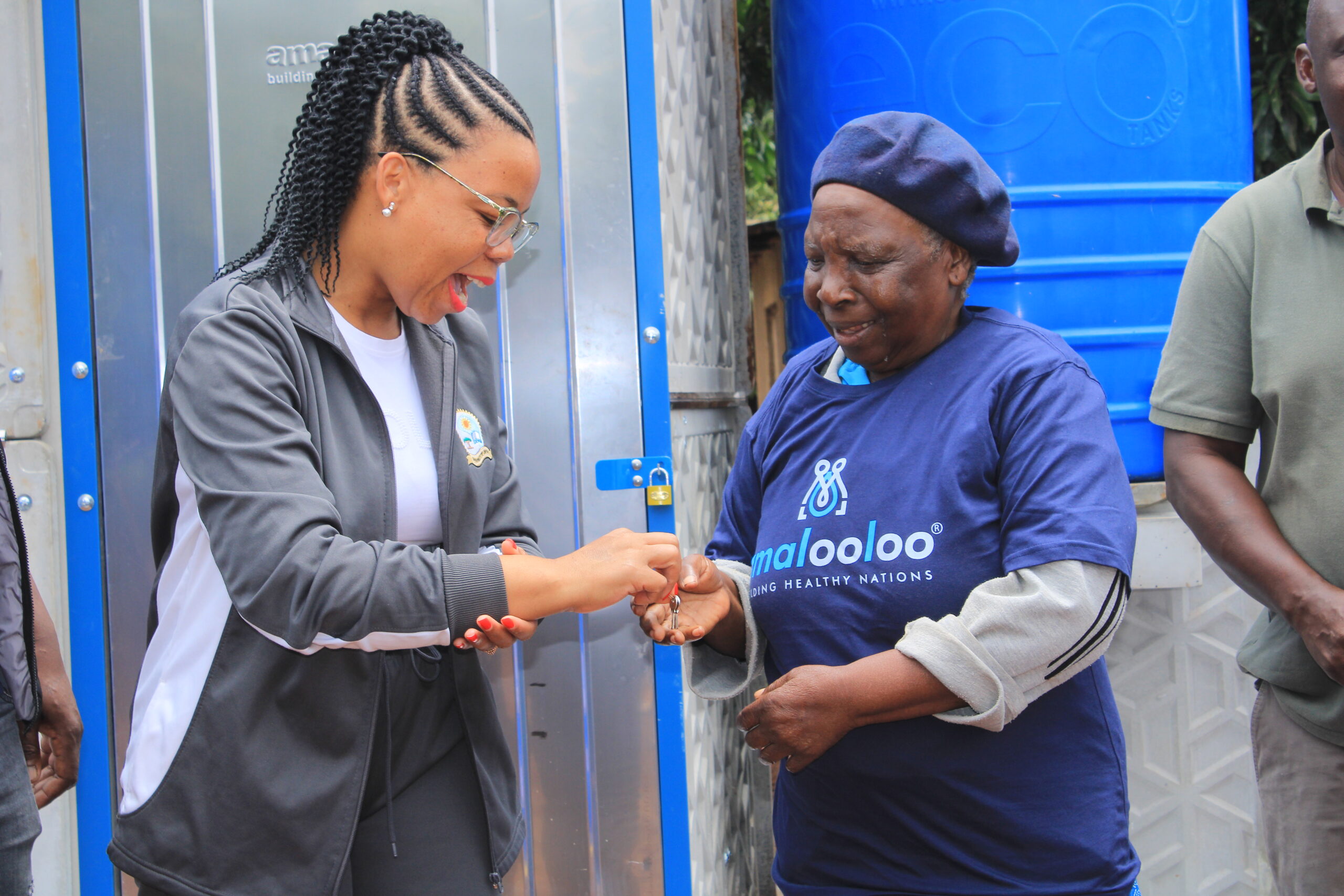
Professor Mabel Mphahlele-Makgwane, Head of the Department of Water and Sanitation at the University of Limpopo (UL), hands over the toilet key to Maria Ramolefe, signifying the beginning of a new chapter in safe and dignified sanitation for her.
By Phishego Mohubedu – ulpublications@ul.ac.za
The University of Limpopo, in collaboration with Betram (Pty) Ltd, recently assisted in restoring the toilet of Maria Ramolefe, an elderly resident of Tickyline Village near Tzaneen in the Mopani District, after it collapsed due to structural failure
This initiative was part of a donation drive supported by Betram (Pty) Ltd known as the Amaloloo rooted in the belief that access to safe sanitation is a fundamental human right that protects health, dignity, and well-being. The presence of the Mopani District Municipality, Department of Water and Sanitation Limpopo Regional Office and Lepelle Northern Water strengthened the collective commitment across the water sector to expand access to dignified, sustainable sanitation—especially for vulnerable communities..
Leading the initiative, the University of Limpopo’s Department of Water and Sanitation quickly mobilised to provide Ramolefe and her family with a safe, sustainable, and dignified sanitation facility. Professor Mabel Mphahlele-Makgwane, Head of the Department, noted that this gesture aligned with the University’s observance of World Toilet Day on 19 November. The University celebrated the day with the Tickyline community, emphasising the importance of sanitation as a cornerstone of human dignity.
“This event aims to tackle the ongoing sanitation challenges in vulnerable communities such as Tickyline,” said Lebogang Selane, Sanitation Lecturer in the BSc Water and Sanitation Sciences programme. “This year’s global theme, ‘We’ll Always Need the Toilet,’ reminds us that sanitation is a fundamental human right and a pillar of health, equality, and dignity,” she emphasised.
Prof Mphahlele-Makgwane added that the University proactively approached Betram (Pty) Ltd, the makers of the Amalooloo dry sanitation system, to collaborate on promoting sustainable solutions for rural communities.
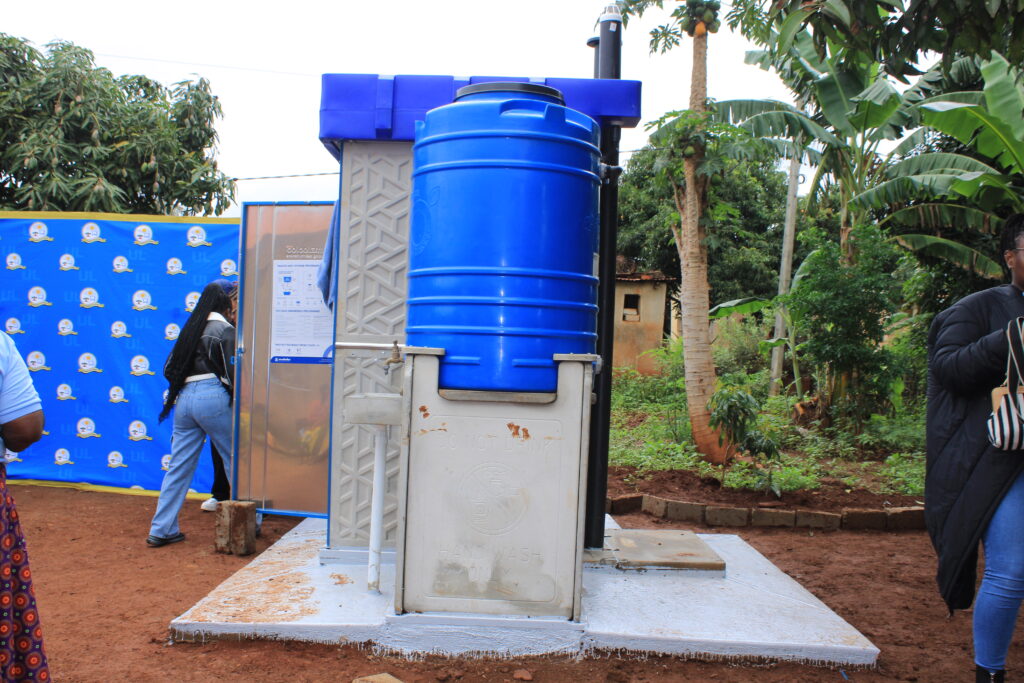
This initiative reflects the University’s core mandate of community service, focusing on improving the welfare and dignity of surrounding communities through practical, research-based interventions. By addressing a fundamental issue like sanitation, the University demonstrates that academic excellence is intertwined with social responsibility. A foundation for deeper collaboration between UL and Betram (Pty) Ltd has begun, spanning student internships, sanitation research, and rural pilot projects.
Amalooloo Project Manager Petrus Bambo emphasised that the organisation shares the University’s vision of restoring dignity and enhancing public health through sanitation.
“Our mission is to celebrate and support those in need within the community. Our motto, ‘Building a Healthy Nation,’ inspires us to create solutions that are safe, affordable, and sustainable,” he stated.
Representing the Limpopo Department of Water and Sanitation, Deputy Director Ronal Matukane used the event to highlight the shared responsibility of maintaining sanitation systems.
“Proper toilet maintenance is essential,” he cautioned. “Residents must refrain from disposing of foreign objects in pit toilets, as this shortens their lifespan and leads to costly repairs.”
For Maria Ramolefe, the new toilet has not only restored her dignity but also provided a renewed sense of safety and relief.
“I thank UL for coming to assist me so promptly after my dilemma,” she expressed emotionally. “May the University continue to help others in need.”
“Sanitation is about dignity,” concluded Prof Mphahlele-Makgwane. “When we provide someone with a toilet, we offer them respect, safety, and the confidence to live with pride.”
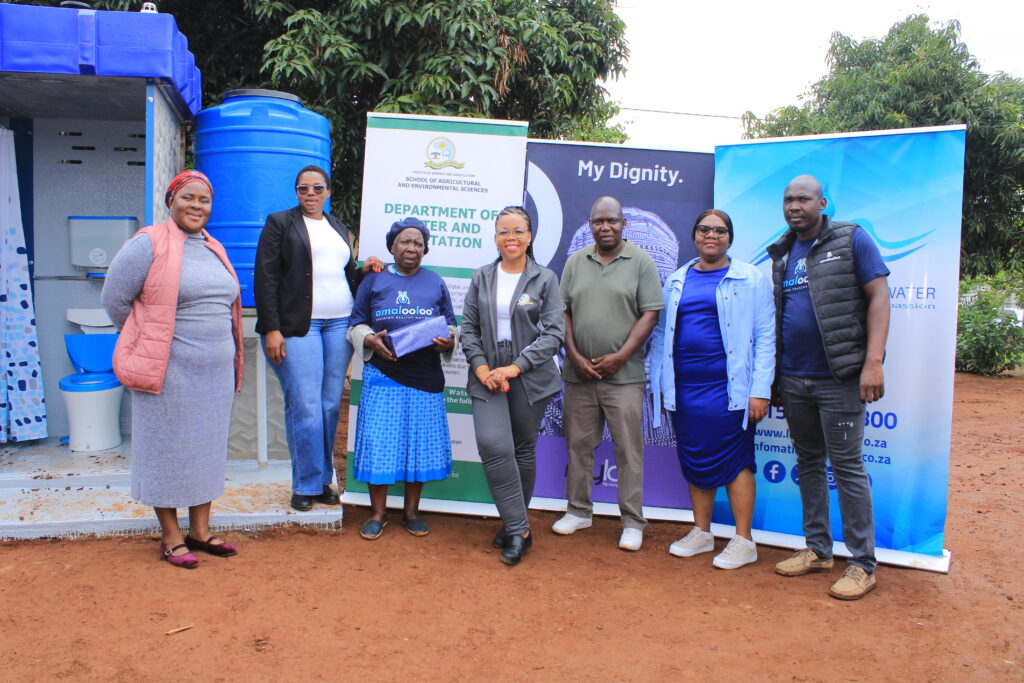
Key stakeholders who made Maria Ramolefe’s new sanitation facility possible and congratulate her on receiving the new toilet, symbolising restored dignity and improved living conditions.