


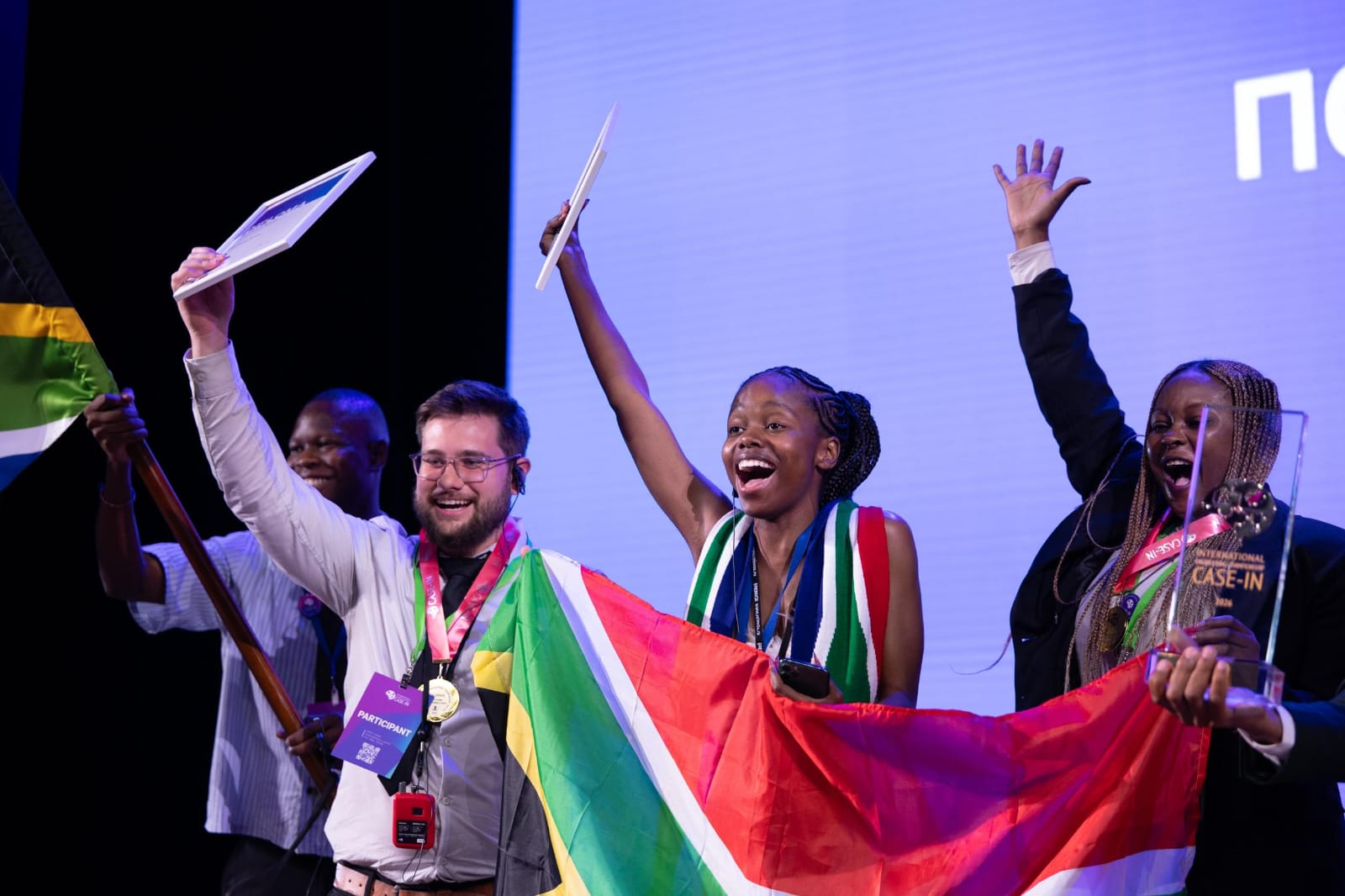
Lucius Mokwena (centre) celebrates with her teammates after emerging as overall winners in the BRICS Young Professionals League during the International Engineering Championship CASE-IN in Brazil.
Lucius Mokwena contributes to Team Zambezi’s winning performance at a global innovation and technology championship in Russia
By Lesego Maaba – ulpublications@ul.ac.za
A University of Limpopo (UL) PhD candidate has helped secure South Africa’s first victory in a major international innovation competition, underscoring the growing contribution of the country’s young researchers to global debates on sustainability, technology and development
Lucius Mokwena, a PhD candidate in Agronomy at the university’s Centre for Global Change, served as an expert member of Team Zambezi, contributing technical guidance that helped the team claim top honours in the BRICS Young Professionals League at the 14th International Engineering Championship CASE-IN in Russia (Moscow). Her participation in the competition was facilitated through UL’s International Affairs Office.
The competition, regarded as one of the largest platforms for emerging researchers and young professionals, challenges participants to develop practical responses to complex economic, environmental and technological challenges.
Team Zambezi outperformed competitors from Brazil, Russia, India, Egypt, Ethiopia, Indonesia and other partner countries, earning South Africa its first victory in the competition.
Beyond the trophy, the achievement highlights the growing presence of South African researchers in global discussions on innovation, sustainability and development. It also reflects the role universities such as UL are playing in producing graduates capable of competing at the highest level.
For Mokwena, who comes from Moletji Ga-Hlahla outside Polokwane, the moment carried both personal and national significance.
“When Team Zambezi was announced as the winner, it felt like a dream. I was overwhelmed with joy and gratitude.] We made history for South Africa,” she said.
Held annually, the championship brings together young researchers and professionals from BRICS countries and partner nations to analyse industry-based case studies and develop solutions within tight timeframes.
As a member of Team Zambezi, Mokwena contributed her research knowledge and problem-solving skills to a winning solution centred on sustainability, the circular economy and emerging technologies.
She said one of the most valuable aspects of the experience was working with young professionals from different countries and disciplines.
“The most rewarding part was learning from people with different perspectives and experiences. We shared ideas on food security, sustainability, energy and technology while building relationships that will continue long after the competition,” she said.
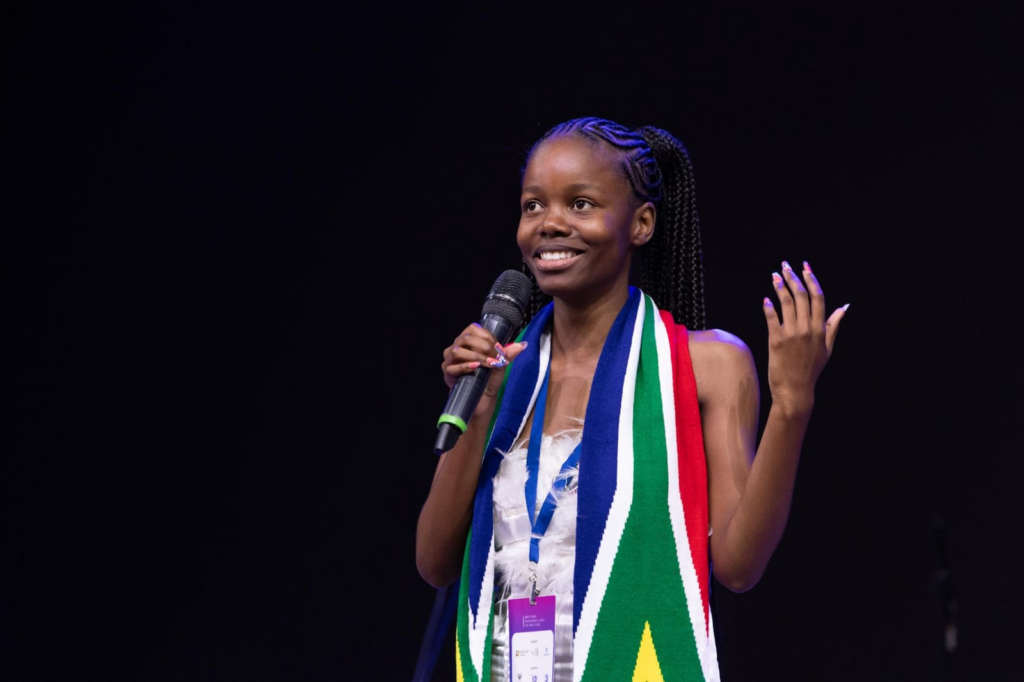
Lucius Mokwena, a PhD candidate in Agronomy at the University of Limpopo, helped South Africa secure its first-ever victory in the BRICS Young Professionals League competition.
The connections established during the programme have already opened opportunities for future collaboration, including a proposed nutrition project with Indonesian partners and participation in joint BRICS research initiatives.
Mokwena is pursuing her PhD under the supervision of Prof Kingsley Ayisi at the Centre for Global Change. Her research focuses on developing sustainable agricultural solutions that improve productivity while promoting responsible resource management.
She believes research should contribute directly to addressing societal challenges.
“Academics are not only about obtaining qualifications; through research, we are providing solutions for society and contributing to global development,” she said.
This is not the first time Mokwena has represented South Africa internationally. In 2025, she was selected to participate in the BRICS Summer School in Russia, where she joined 25 young leaders from around the world to explore sustainable development and global cooperation.
She encouraged students to pursue academic excellence and take advantage of opportunities that allow them to contribute their knowledge and skills on international platforms.
“When Team Zambezi was announced as the winner, it felt like a dream. I was overwhelmed with joy and gratitude. We made history for South Africa.”
