


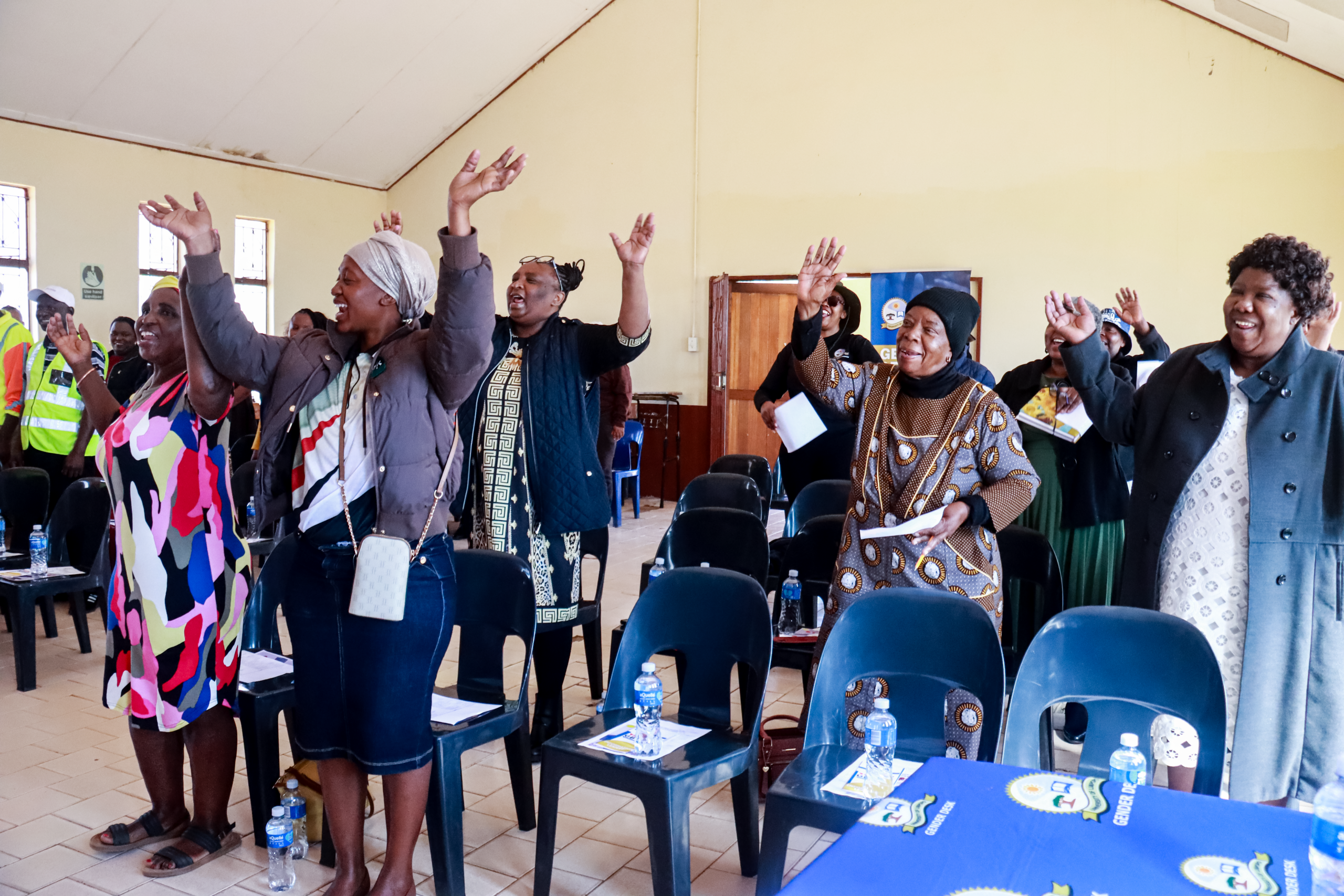
Community members from Ga-Makanye village participate in a GBV awareness campaign organised by the University of Limpopo’s (UL) Gender Desk, calling for an end to gender-based violence. Photos: Frans Nkhapele
When violence happens next door, do you keep quiet?
By Phuti Semenya – ulpublications@ul.ac.za
For many communities, gender-based violence is not something that happens elsewhere, it happens behind closed doors, in neighbouring homes and in families where victims are often too afraid to speak
It is this silence that the University of Limpopo’s (UL) Gender Desk, in partnership with the RSF Agency for Development, is trying to break.
The two organisations took the conversation on gender-based violence and femicide (GBVF) into Ga-Makanye, a village situated just across R71 from UL. They hosted a community engagement dialogue at the ELCSA Ga-Makanye Congregation under the theme, “United Against GBVF, Strengthening Community Partnerships for Safe Communities”.
The dialogue brought together community members and stakeholders, including the South African Police Service (SAPS), Community Police Forum (CPF), the traditional council and a prosecutor from the Mankweng Magistrates’ Court.
The aim was to confront a problem that continues to affect families and communities, and to remind residents that the fight against GBVF cannot be left to the police, courts or government alone.
Rev. Dr Ngwako Rapakwana, Director of the UL Gender Desk, said Ga-Makanye had been identified as a hotspot for GBV in the Mankweng area.
She urged residents to stop treating violence as a private family matter and to speak out when they know someone is being abused.
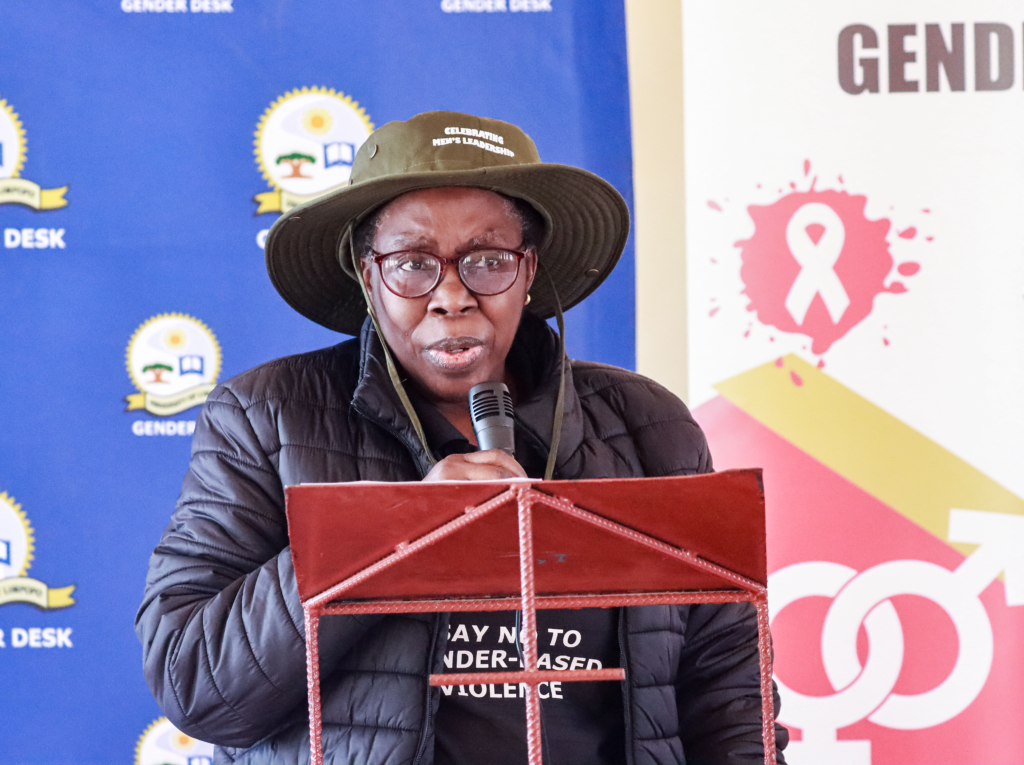
Rev. Dr Ngwako Rapakwana, Director of the University of Limpopo’s Gender Desk, says fear of victimisation prevents some children from reporting gender-based violence.
“As the community of Makanye, let’s gather our thoughts and fight GBV. Let’s talk about it and raise awareness that GBV is not right,” Rev. Dr Rapakwana said.
Rev. Dr Rapakwana said the presence of NGOs, government departments and SAPS at the dialogue was meant to showcase numerous parties one can seek help from in the event they become victims of the GBV scourge.
But she warned against waiting until violence becomes fatal before taking action.
“You can’t say it is not my house. When it happens at the neighbour’s house, talk about it. Are you waiting for the neighbour to die so you can go and cook there?”
She said children who experience or witness violence often remain silent because they are threatened with harm to themselves or their mothers.
“But today we are here to talk,” she said, adding that everyone has a responsibility to help end GBV.
During the dialogue, residents and stakeholders worked in pairs to discuss causes of GBVF, the challenges faced by women and children, and what could be done to make the community safer.
Excessive alcohol use and difficulties in controlling anger were identified by participants as some of the factors that contribute to violence against women in families.
The discussion also focused on the importance of seeking help, reporting cases and understanding the different forms of abuse.
A community member who did not want to be named said the dialogue was an opportunity to learn more about cases that can be reported and how residents can play a role in fighting GBV.
“I learnt that there are many cases to report, but we are not reporting them. It is my responsibility to play my part in eradicating GBV,” said the community member.
Tlou Megale, a prosecutor from the Mankweng Magistrates’ Court, explained the legal process to residents, including what happens after a GBV case is reported at a police station.
She took the community through the process from the police station to the magistrates’ court and, where appropriate, to trial.